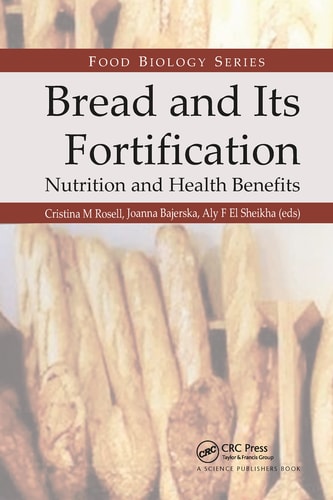
Bread and Its Fortification: Nutrition and Health Benefits
0
0
As an Amazon Associate and affiliate partner, Menrva Books earns from qualifying purchases. Learn more
Author Description
Today, bread supplies over half of the caloric intake of the world's population including a high proportion of the intake of Vitamins B and E. Bread therefore is a major food of the world. Bread was the main stables of the ancient Egyptian diet. Around 7,000 BC humans (probably Egyptians) somehow learned to grind grains in water and heat the mix on hot stoves to make unleavened bread. The art of bread making goes back to very early stages of different historical eras. Bread is an important part of the human diet, but for many people, it is much more than just providing macro- and micro-nutrients. Bread with their different types is influenced mainly by the nature of substrate and microorganisms involved in the fermentation. The components of bread depend on the type of bread and on practice and regulations operating in a country. They include basic components and other components (fortifying or enriching ingredients, emulsifiers, anti-fungal agents, anti-oxidants, enzymes and favoring agents, etc.). Bread and its Fortification for Nutrition and Health Benefits provides updated information in the area of bread and its fortification for health benefits. It serves as a useful reference book with recent advances in the areas of fermentation technology, bread microbiology, bread biotechnology, and bread biochemistry, which is related strongly to human health.
Menrva's Summary
THE THESIS
This book investigates the critical role of bread as a global food source and explores the science behind its fortification for enhanced nutritional and health benefits. The authors provide updated information on fermentation technology, bread microbiology, biotechnology, and biochemistry, all of which are directly linked to human health. It details how bread, a staple for billions, is influenced by substrate and microorganisms, and how its components, including fortifying ingredients, are determined by type and regional practices.
THE SCOPE MAP
- Updated information on fermentation technology in bread making.
- Recent advances in bread microbiology and biotechnology.
- Exploration of bread biochemistry and its relation to human health.
- Details on the components of bread, including fortifying ingredients.
- Historical context of bread as a staple food source.
- The influence of substrate and microorganisms on bread characteristics.
THE AUTHORITY PERSPECTIVE
This book serves as a valuable reference for recent advances in bread science and fortification. It covers key areas such as fermentation technology, microbiology, biotechnology, and biochemistry, all crucial for understanding bread's impact on human health. The work details the historical significance of bread and the scientific factors influencing its composition and nutritional value.
Page Count:
420
Publication Date:
2021-09-30
Publisher:
Taylor & Francis Group
ISBN-10:
1032179635
ISBN-13:
9781032179636
Non-Fiction
Health
Science
Nutrition
Biotechnology
Food Science
Biochemistry
Community Tags
Similar Books