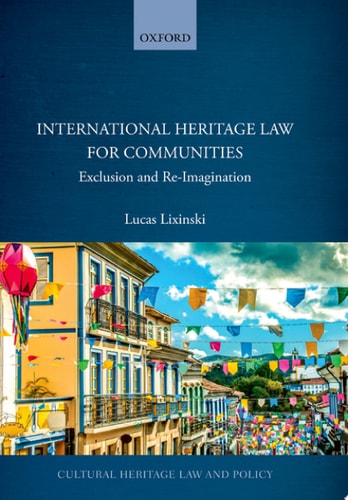
International Heritage Law for Communities
0
0
As an Amazon Associate and affiliate partner, Menrva Books earns from qualifying purchases. Learn more
Author Description
This Book Critically Engages The Shortcomings Of The Field Of International Heritage Law, Seen Through The Lenses Of The Five Major Unesco Treaties For The Safeguarding Of Different Types Of Heritage. It Argues That These Five Treaties Have Effectively Prevented Local Communities, Who Bear The Brunt Of The Costs Associated With International Heritage Protection, From Having A Say In How Their Heritage Is Managed. The Exclusion Of Local Communities Often Alienates Them Not Only From International Decision-making Processes But Also From Their Cultural Heritage Itself, Ultimately Meaning That Systems Put In Place For The Protection Of Cultural Heritage Contribute To Its Disappearance In The Long Term. International Heritage Law For Communities Adds To Existing Literature By Looking At These Unesco Treaties Not As Isolated Regimes, But Rather As Belonging To A Discursive Continuum On Cultural Heritage. In Doing So, The Book Focuses On Themes That Cut Across The Relevant Unesco Regimes Like The Use Of Expert Rule In International Heritage Law, Economics, The Relationship Between Heritage And The Environment, Among Others, Rather Than The Regimes Themselves. It Uses This Mechanism To Highlight The Blind Spots And Unintended Consequences Of Unesco Treaties And How Choices Made In Their Drafting Have Continuing And Potentially Negative Impacts On How We Think About And Safeguard Heritage.
Menrva's Summary
THE THESIS
This book investigates how international heritage law, specifically through the framework of five major UNESCO treaties, systematically excludes local communities from the management and decision-making processes regarding their own cultural heritage. Lucas Lixinski, a scholar in international law, utilizes a critical legal analysis to argue that the current regime prioritizes expert-led governance over local agency. By examining these treaties as a discursive continuum rather than isolated legal instruments, the author demonstrates how the resulting alienation of local populations often undermines the long-term preservation goals of the international community.
THE SCOPE MAP
What You Will Find
- Analysis of the five primary UNESCO treaties concerning cultural heritage protection.
- Examination of cross-cutting themes including expert rule, economic impacts, and environmental intersections.
- A critique of the drafting choices and unintended consequences inherent in international heritage governance.
Scope Limits
- The text does not provide a comprehensive history of every individual heritage site protected under UNESCO.
- It does not offer a step-by-step manual for local community legal advocacy.
THE AUTHORITY PERSPECTIVE
Experts in international law and heritage studies recognize this work as a significant critique of the institutional architecture governing global cultural preservation. Readers frequently note the academic density of the prose, which is well-suited for scholars and practitioners seeking a deeper understanding of the intersection between international law and community rights.
Page Count:
336
Publication Date:
2019-01-01
Publisher:
Oxford University Press
ISBN-10:
0192581309
ISBN-13:
9780192581303
Public Policy
Law
International Law
Human rights
Sociology
Community Tags
Similar Books