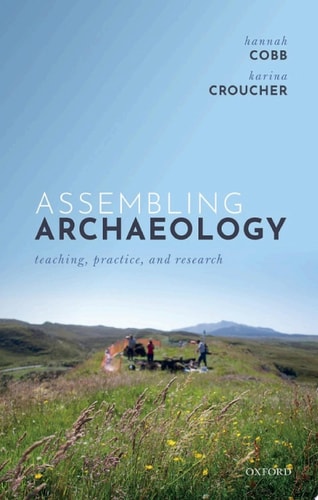
Assembling Archaeology: Teaching, Practice, and Research
0
0
As an Amazon Associate and affiliate partner, Menrva Books earns from qualifying purchases. Learn more
Author Description
Assembling Archaeology provides a radical rethinking of the relationships between teaching, researching, digging, and practicing as an archaeologist in the 21st century. The issues addressed here are global and applicable wherever archaeology is taught, practiced, and researched. At its heart this book addresses the undervaluation of teaching, demonstrating that this affects the fundamentals of contemporary archaeological practice and is particularly connected to the lack of diversity in disciplinary demographics. It proposes a solution which is grounded in a theoretical rethinking of archaeological teaching, training, and practice by advocating a holistic 'assemblage' approach which challenges traditional power structures and the global marketization of the higher education system. Drawing on insights from archaeology's current material turn, this book approaches the discipline as a subject of investigation and offers a new perspective founded upon the notion of the learning assemblage, which resituates teaching and learning as a central focus and contributes to broader discourses on critical pedagogy and rhizomatic learning. It ultimately argues for a robust archaeological pedagogy that is rooted in and emergent from the material realities of the profession, and will be valuable to everyone from academia to Cultural Resource Management (CRM), heritage professional to undergraduate student.
Menrva's Summary
THE THESIS
This book investigates how the systemic undervaluation of teaching within archaeology negatively impacts professional practice and disciplinary diversity. Authors Hannah Cobb and Karina Croucher, both established academics, utilize a theoretical framework rooted in the 'material turn' to argue that teaching must be elevated to a central pillar of the discipline. By challenging the marketization of higher education, they propose a 'learning assemblage' model that integrates pedagogical theory with the practical realities of field and laboratory work.
THE SCOPE MAP
What You Will Find
- A critique of current power structures within archaeological higher education.
- The 'learning assemblage' framework for integrating teaching and research.
- Discussions on critical pedagogy and rhizomatic learning applied to field training.
- Analysis of the connection between pedagogical methods and demographic diversity in the field.
Scope Limits
- The text focuses primarily on academic and professional pedagogical structures rather than specific archaeological excavation techniques or site reports.
THE AUTHORITY PERSPECTIVE
Experts recognize this work as a significant contribution to the discourse on archaeological pedagogy and professional training. Readers frequently note the academic density of the prose, which serves as a foundational text for those looking to bridge the gap between classroom instruction and field practice.
Page Count:
240
Publication Date:
2020-01-01
Publisher:
OUP Oxford
ISBN-10:
0192588176
ISBN-13:
9780192588173
Education
Academic Research
Pedagogy
Higher Education
Archaeology
Community Tags
Similar Books