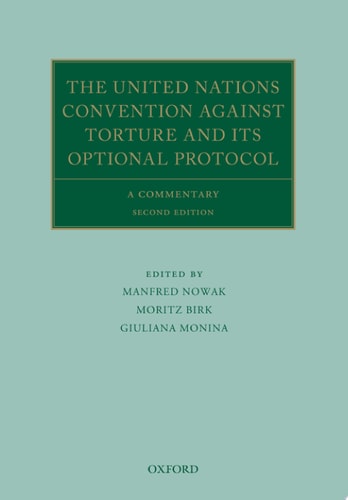
The United Nations Convention Against Torture and Its Optional Protocol
0
0
As an Amazon Associate and affiliate partner, Menrva Books earns from qualifying purchases. Learn more
Author Description
The Prohibition Of Torture - The Right To Physical And Mental Integrity - Is Guaranteed In The Strongest Terms Under International Law. It Is Protected As An Absolute Right, Non-derogable Even In Times Of War Or Public Emergency Under Many Human Rights Treaties And Is Also Generally Accepted As A Part Of Customary International Law And Even Ius Cogens. The Main Instrument To Combat Torture Within The Framework Of The United Nations Is The Convention Against Torture And Other Cruel, Inhuman, Or Degrading Treatment Or Punishment (cat). This Commentary Explores The Problematic Definition Of Torture In The Convention, The Substantive Obligations Of States Parties, The Principle Of 'non-refoulement', Provisions For International Monitoring, And Also The Concept Of Preventative Visits To All Places Of Detention As Contained In The Optional Protocol To The Cat. It Also Covers Issues Including The Distinction Between Torture And Cruel Inhuman Or Degrading Treatment And The Principle Of Non-admissibility Of Evidence Extracted Under Torture. Full Article By Article Commentary On The Convention Also Provides Historical Context And Thorough Analysis Of Case-law And Practice From International And Regional Courts And Monitoring Bodies. Relevant Case-law From Domestic Courts Are Also Discussed. Despite The Broad Ratification And The Universal Recognition Of The Prohibition Of Torture And Other Forms Of Ill-treatment We Witness A 'global Crisis' Affecting The Majority Of Countries Worldwide. In Recent Years The Protection Of Human Rights Is Experiencing A Particularly Serious Crisis - Also Affecting The Phenomenon Of Torture - In Which Official Narratives And Public Belief Often Trivialise And Even Endorse Such Practices In The Name Of Security And The Fight Against Terrorism, Ignoring The Suffering And Damages It Causes. On The Other Hand, The Positive Experiences In Some States Illustrate That Torture Can Be Eradicated If The Provisions Of Cat And Opcat Are Taken Seriously And A
Menrva's Summary
THE THESIS
This work investigates the legal framework and practical application of the United Nations Convention Against Torture (CAT) and its Optional Protocol (OPCAT) as mechanisms to combat the global persistence of torture. The authors, including experts in international human rights law, provide a comprehensive analysis of the treaty's provisions, the obligations of state parties, and the challenges posed by modern security narratives that threaten to undermine the absolute prohibition of ill-treatment. By synthesizing historical context with contemporary case law, the text argues that the eradication of torture is achievable through rigorous adherence to international monitoring and preventative detention oversight.
THE SCOPE MAP
What You Will Find
- Article-by-article commentary on the Convention Against Torture.
- Analysis of the principle of non-refoulement and the non-admissibility of evidence extracted under duress.
- Examination of preventative visit mechanisms for places of detention under the Optional Protocol.
- Review of case law from international, regional, and domestic judicial bodies.
Scope Limits
- The text focuses primarily on the legal and procedural mechanisms of the UN framework rather than sociological studies of torture victims.
- It does not provide an exhaustive list of every domestic court ruling globally, focusing instead on representative case law.
THE AUTHORITY PERSPECTIVE
Legal scholars and practitioners identify this work as a definitive reference for understanding the complexities of the CAT and OPCAT. Readers frequently note the academic density of the prose, which makes it a primary resource for those engaged in human rights advocacy and international law.
Page Count:
1376
Publication Date:
2019-01-01
Publisher:
Oxford University Press
ISBN-10:
019258507X
ISBN-13:
9780192585073
Human rights
Public Policy
Law
International Law
Community Tags
Similar Books







Reader Comments
Share Your Thoughts
No comments yet. Be the first to share your thoughts!