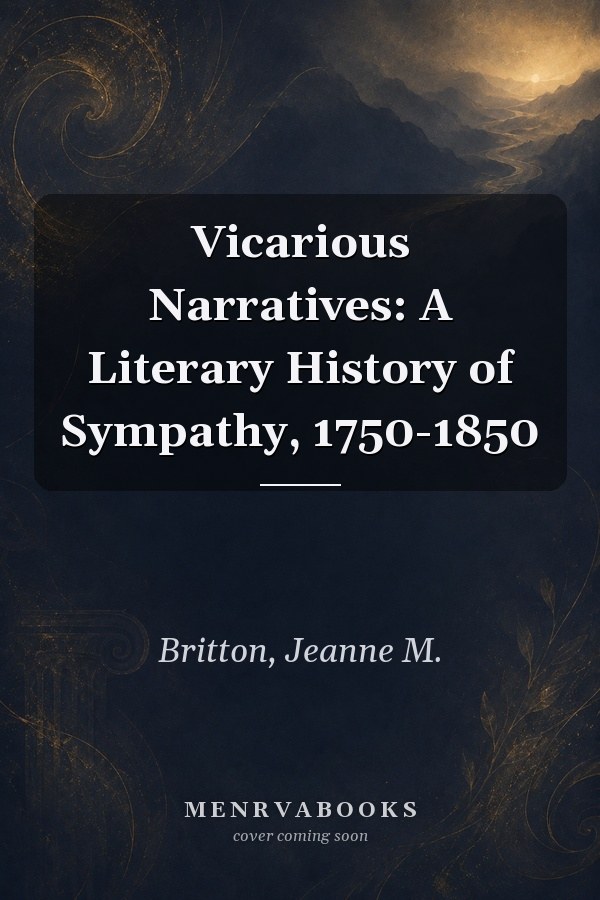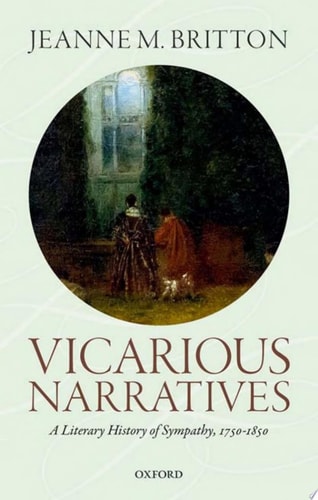
Vicarious Narratives
0
0
As an Amazon Associate and affiliate partner, Menrva Books earns from qualifying purchases. Learn more
Author Description
Adam Smith's Theory Of Moral Sentiments (1759) Defines Sympathy As A Series Of Shifts In Perspective By Which One Sees From A Different Point Of View. British And French Novels Published Over The Following Century Redefine Sympathy Through Narrative Form—shifting Perspectives Or 'stories Within Stories' In Which One Character Adopts The Voice And Perspective Of Another. Fiction Follows Smith's Emphasis On Sympathy's Shifting Perspectives, But This Formal Echo Coincides With A Challenge. For Smith And Other Enlightenment Philosophers, The Experience Of Sympathy Relies On Human Resemblance. In Novels, By Contrast, Characters Who Are Separated By Nationality, Race, Or Species Experience A Version Of Sympathy That Struggles To Accommodate Such Differences. Encounters Between These Characters Produce Shifts In Perspective Or Framed Tales As One Character Sympathizes With Another And Begins To Tell Her Story, Echoing Smith's Definition Of Sympathy In Their Form While Challenging Enlightenment Philosophy's Insistence On Human Resemblance. Works Of Sentimental And Gothic Fiction Published Between 1750 And 1850 Generate A Novelistic Version Of Sympathy By Manipulating Traditional Narrative Forms (epistolary Fiction, Embedded Tales) And New Publication Practices (the Anthology, The Novelistic Extract). Second-hand Stories Transform The Vocal Mobility, Emotional Immediacy, And Multiple Perspectives Associated With The Declining Genre Of Epistolary Fiction Into The Narrative Levels And Shifting Speakers Of Nineteenth-century Frame Tales. Vicarious Narratives Argues That Fiction Redefines Sympathy As The Struggle To Overcome Difference Through The Active Engagement With Narrative—by Listening To, Re-telling, And Transcribing The Stories Of Others.
Menrva's Summary
THE THESIS
This book investigates how British and French novels between 1750 and 1850 redefined the philosophical concept of sympathy through the evolution of narrative form. Jeanne M. Britton, an academic scholar, analyzes the intersection of Enlightenment philosophy and literary structure to argue that fiction transformed sympathy from a process based on human resemblance into a complex struggle to bridge differences in nationality, race, and species. By examining how characters adopt the voices and stories of others, the author demonstrates that the act of storytelling itself became a mechanism for navigating social and ontological boundaries.
THE SCOPE MAP
What You Will Find
- Analysis of 18th and 19th-century sentimental and Gothic fiction.
- Examination of narrative structures including epistolary fiction, embedded tales, and frame narratives.
- Discussion of Adam Smith's Theory of Moral Sentiments in relation to literary form.
- Investigation of how publication practices like anthologies and extracts influenced narrative perspective.
Scope Limits
- The study is strictly confined to British and French literature published between 1750 and 1850.
- It does not provide a comprehensive history of the novel, focusing instead on the specific formal mechanics of sympathy.
THE AUTHORITY PERSPECTIVE
Scholars and critics recognize this work as a rigorous contribution to the study of narrative theory and the history of the novel. Readers frequently note the academic density of the prose, highlighting its value for those interested in the formal evolution of literary sympathy.
Page Count:
272
Publication Date:
2019-01-01
Publisher:
Oxford University Press
ISBN-10:
0192585894
ISBN-13:
9780192585899
Philosophy
Academic
18th century
Literary Criticism
Narratology
19th Century
Community Tags
Similar Books