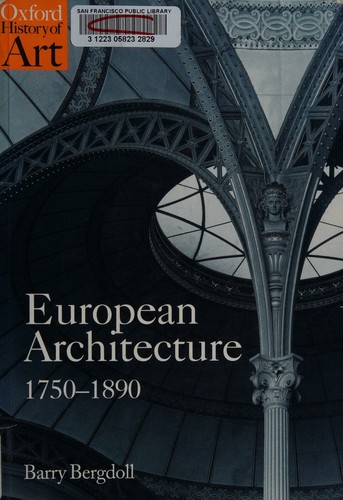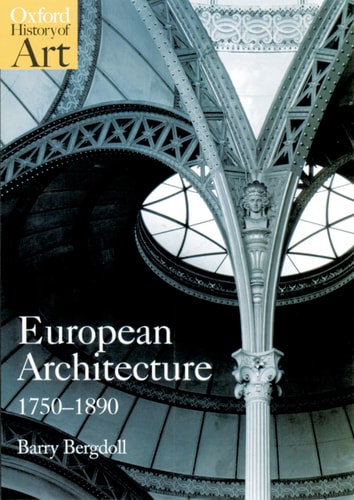
European Architecture 1750-1890
0
0
As an Amazon Associate and affiliate partner, Menrva Books earns from qualifying purchases. Learn more
Author Description
This comprehensive examination of eighteenth and nineteenth-century architecture explores its extreme diversity within the context of tremendous social, economic and political upheaval. Never before had the functional requirements and expressive capacities of architecture been tested so thoroughly and with such diversity of invention. Bergdoll traces this experimentation in a broad range of contexts, focusing in particular on the relation of architectural design to new theories of history, new categories of scientific inquiry, and the broadening audience for architecture in this period of transformation. Unlike traditional surveys with long lists of buildings and architects, the themes are elucidated by in-depth coverage of key buildings which in turn are situated in both their local and European context.
Menrva's Summary
THE THESIS
This text investigates how the rapid social, economic, and political transformations of the 18th and 19th centuries fundamentally reshaped the functional and expressive roles of European architecture. Barry Bergdoll, a noted architectural historian, utilizes a thematic framework rather than a chronological list to analyze how architectural design intersected with emerging theories of history and scientific inquiry. By focusing on specific case studies, the author demonstrates how architects navigated the pressures of modernization and shifting cultural expectations during this period of intense change.
THE SCOPE MAP
What You Will Find
- Analysis of architectural developments across Europe between 1750 and 1890.
- Examination of the relationship between design and contemporary scientific or historical theories.
- In-depth studies of key buildings as representative models of broader trends.
Scope Limits
- The text does not provide an exhaustive catalog of every significant building or architect of the era.
- It focuses primarily on the European context, excluding developments in non-Western architectural traditions.
THE AUTHORITY PERSPECTIVE
Scholars and students frequently cite this work as a sophisticated alternative to traditional, encyclopedic surveys of the period. Experts highlight the author's ability to synthesize complex historical contexts with specific design analysis, making it a standard reference for understanding the evolution of modern architecture.
Page Count:
336
Publication Date:
2000-12-07
Publisher:
Oxford University Press
ISBN-10:
0192842226
ISBN-13:
9780192842220
Non-Fiction
Architecture
18th century
Neoclassicism Architecture
Art History
European History
19th Century
Architecture