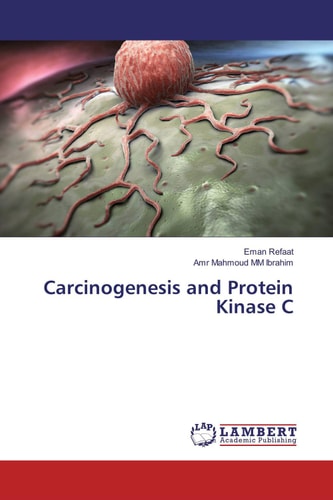
Carcinogenesis and Protein Kinase C
0
0
As an Amazon Associate and affiliate partner, Menrva Books earns from qualifying purchases. Learn more
Author Description
A protein kinase is a kinase enzyme that modifies other proteins by chemically adding phosphate groups to them (phosphorylation). Phosphorylation usually results in a functional change of the target protein (substrate) by changing enzyme activity, cellular location, or association with other proteins. PKC isozymes are activated by a variety of hormones, such as adrenalin and angiotensin, by growth factors, including epidermal growth factor and insulin, and by neurotransmitters such as dopamine and endorphin; these stimulators, when bound to their respective receptors, activate members of the phospholipase C family, which generates diacylglycerol, a lipid derived second messenger.
Menrva's Summary
THE THESIS
This book investigates the intricate relationship between protein kinase C (PKC) and the complex process of carcinogenesis. The authors, Amr M. Ibrahim and Eman Refaat, explore how PKC isozymes, activated by various cellular signals, play a critical role in cell growth, differentiation, and survival. The text details how dysregulation of PKC signaling pathways can contribute to uncontrolled cell proliferation and tumor development, making it a key area of focus in cancer research.
THE SCOPE MAP
- Detailed explanation of protein kinase C (PKC) function and its role in cellular signaling.
- Analysis of how various hormones, growth factors, and neurotransmitters activate PKC isozymes.
- Exploration of diacylglycerol (DAG) as a second messenger in PKC activation pathways.
- Discussion of the specific mechanisms by which PKC dysregulation contributes to carcinogenesis.
- Overview of different PKC isozymes and their distinct roles in cellular processes.
- Examination of the implications of PKC signaling in cancer development and progression.
THE AUTHORITY PERSPECTIVE
This book appears to be a focused scientific text aimed at researchers and advanced students in molecular biology and oncology. The detailed exploration of protein kinase C's role in cancer suggests it provides a comprehensive overview of a specific signaling pathway relevant to tumor development. The technical nature of the subject matter indicates it is likely to be valued for its depth and specific biochemical insights rather than broad accessibility.
Page Count:
76
Publication Date:
2018-02-01
Publisher:
LAP LAMBERT Academic Publishing
ISBN-10:
6137347613
ISBN-13:
9786137347614
Science
Non-Fiction
Biochemistry
Cancer Research
Community Tags
Similar Books