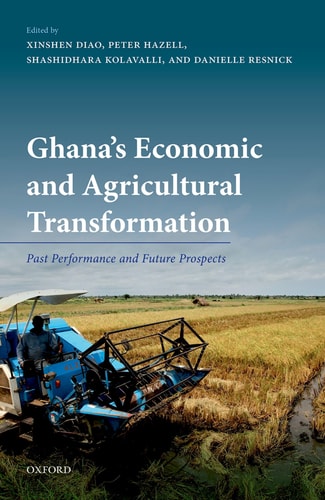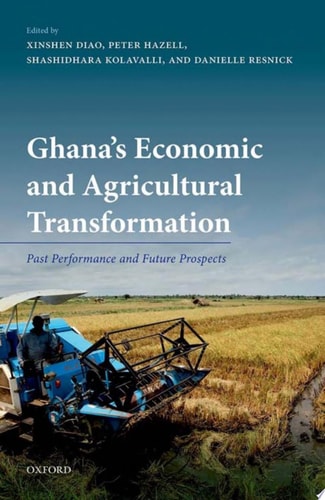
Ghana's Economic and Agricultural Transformation: Past Performance and Future Prospects
0
0
As an Amazon Associate and affiliate partner, Menrva Books earns from qualifying purchases. Learn more
Author Description
Many African Countries Have Experienced Unprecedented Rates Of Economic Growth In Recent Years, Yet Their Economic Transformations Display Features That Could Constrain Their Future Growth Prospects. Patterns Of Urbanization Without Industrialization, Rapid Growth Of Low Productivity Jobs In The Informal Economy, And A Neglected Agricultural Sector With Increased Need For Important Foods Are All Areas For Concern As Africa Continues To Develop. Using Ghana As A Case Study, Ghana's Economic And Agricultural Transformation: Past Performance And Future Prospects Integrates Economic And Political Analysis To Explore The Challenges And Opportunities Of Africa's Transformation. It Examines Ghana's Overall Economic Performance Since It Went Through A Major Structural Adjustment Program In The Early 1980s, And Provides An In-depth Empirical Analysis Of The Broader Economy And The Agricultural Sector Over The Last Four Decades. It Explains Why Ghana Has Not Transformed Its Economy More Substantially, Why Its Agriculture Sector Has Not Played A Greater Role Beyond Cocoa Production, And What Must Be Done In The Future To Achieve A Successful Transformation. In Addressing These Puzzles Ghana's Economic And Agricultural Transformation Considers What The Rest Of The World Can Learn From Ghana's Experience.
Menrva's Summary
THE THESIS
This book investigates the structural barriers preventing Ghana from achieving a comprehensive economic and agricultural transformation despite decades of growth. The authors, a team of researchers from the International Food Policy Research Institute, utilize empirical data and political economy frameworks to analyze Ghana's development trajectory since the 1980s. They argue that the country's reliance on informal labor and the stagnation of the agricultural sector beyond cocoa production represent critical bottlenecks that require targeted policy interventions.
THE SCOPE MAP
What You Will Find
- Longitudinal analysis of Ghana's economic performance from the 1980s to the present.
- Comparative study of urbanization patterns and industrialization trends.
- Empirical assessment of agricultural productivity and diversification challenges.
- Political economy analysis of structural adjustment programs.
Scope Limits
- The study focuses primarily on the Ghanaian context and does not provide exhaustive comparative data for all other African nations.
- The text does not offer prescriptive micro-level business advice for individual farmers.
THE AUTHORITY PERSPECTIVE
Experts recognize this work as a rigorous empirical contribution to development economics, frequently citing its detailed analysis of the agricultural sector's limitations. Readers often note the academic density of the prose, which makes it a valuable resource for policymakers and researchers focusing on sub-Saharan African development.
Page Count:
304
Publication Date:
2019-01-01
Publisher:
Oxford University Press
ISBN-10:
0192584030
ISBN-13:
9780192584038
Economics
Ghana
Agriculture