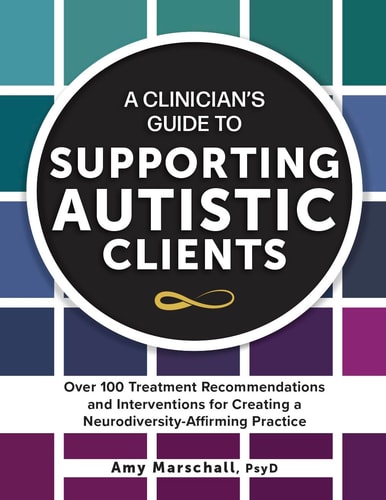
A Clinician's Guide to Supporting Autistic Clients: Over 100 Treatment Recommendations and Interventions for Creating a Neurodiversity-Affirming Practice
0
0
As an Amazon Associate and affiliate partner, Menrva Books earns from qualifying purchases. Learn more
Author Description
How can I best support the needs of my neurodivergent clients in therapy? Creating a more supportive environment for autistic clients can be a confusing process. With so much information, and so many different perspectives, it can be difficult to know where to start. Further, the mental health field has only recently begun moving away from "treating autism" to working with autistic and neurodivergent individuals in a more affirming way. That's why Dr. Amy Marschall created A Clinician's Guide to Supporting Autistic Clients. As an expert psychologist and a member of the autism community herself, she recognized the need to move away from treatments that pathologize differences and toward a neurodiversity-affirming approach that meets clients where they are. Inside this new and invaluable resource, you'll find over 100 affirming tips, tools, and interventions that will allow you to: Honor the language preferences, goals, and priorities of the autistic community Create a foundation for assessment and treatment that best supports autistic clients Correct unintentional harms caused by historical "best practices" in autism treatment Address sensory stimulation and food-based sensitivities in session Facilitate communication among semispeaking or nonspeaking clients Request accommodations when appropriate And more! You'll also find a bonus list of resources about autism written by and for autistic individuals. Neurodiversity-affirming care is not a set of specific behaviors or interventions but an underlying philosophy of honoring each client's needs today and every day. Let this resource be your guide!
Menrva's Summary
THE THESIS
This guide provides clinicians with over 100 neurodiversity-affirming recommendations and interventions for supporting autistic clients. Dr. Amy Marschall, an expert psychologist and member of the autism community, addresses the shift in mental health from
THE SCOPE MAP
- Over 100 affirming tips, tools, and interventions
- Guidance on honoring language preferences, goals, and priorities of the autistic community
- Strategies for creating a foundation for assessment and treatment that supports autistic clients
- Methods for correcting unintentional harms from historical autism treatment practices
- Techniques for addressing sensory stimulation and food-based sensitivities in session
- Facilitation of communication for semispeaking or nonspeaking clients
- Guidance on requesting accommodations
- A bonus list of resources about autism written by and for autistic individuals
THE AUTHORITY PERSPECTIVE
This guide is designed to be an invaluable resource for clinicians seeking to adopt a neurodiversity-affirming approach. It moves away from pathologizing differences and toward meeting clients where they are, offering practical tools and interventions. The content focuses on honoring client autonomy, addressing specific therapeutic challenges like sensory sensitivities and communication, and correcting past therapeutic missteps. The underlying philosophy emphasizes continuous support and respect for each client's individual needs.
Page Count:
236
Publication Date:
2024-04-09
Publisher:
PESI Publishing
ISBN-10:
1683737482
ISBN-13:
9781683737483
Psychology
Self-help
Health
Non-Fiction
Professional Development
Community Tags
Similar Books