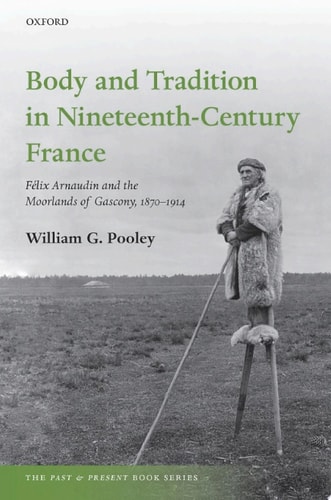
Body and Tradition in Nineteenth-Century France: Félix Arnaudin and the Moorlands of Gascony, 1870-1914
0
0
As an Amazon Associate and affiliate partner, Menrva Books earns from qualifying purchases. Learn more
Author Description
The moorlands of Gascony are often considered one of the most dramatic examples of top-down rural modernization in nineteenth-century Europe. From an area of open moors, they were transformed in one generation into the largest man-made forest in Europe. Body and Tradition in Nineteenth-Century France explores how these changes were experienced and negotiated by the people who lived there, drawing on the immense ethnographic archive of Félix Arnaudin (1844-1921). The study places the songs, stories, and everyday speech that Arnaudin collected, as well as the photographs he took, in the everyday lives of agricultural workers and artisans. It argues that the changes are were understood as a gradual revolution in bodily experiences, as men and women forged new working habits, new sexual relations, and new ways of conceiving of their own bodies. Rather than merely presenting a story of top-down reform, this is an account of the flexibility and creativity of the cultural traditions of the working population. William G. Pooley tells the story of the folklorist Arnaudin and the men and women whose cultural traditions he recorded, then uncovers the work carried out by Arnaudin to explore everyday speech about the body, stories of werewolves and shapeshifters, tales of animal cunning and exploitation, and songs about love and courtship. The volume focuses on the lives of a handful of the most talented storytellers and singers Arnaudin encountered, showing how their cultural choices reflect wider patterns of behaviour in the region, and across rural Europe.
Menrva's Summary
THE THESIS
How did the rapid modernization of the Gascony moorlands fundamentally alter the bodily experiences and cultural expressions of its rural inhabitants? William G. Pooley, a historian specializing in nineteenth-century French social and cultural history, utilizes the extensive ethnographic archives of Félix Arnaudin to investigate this transformation. The book argues that the shift from open moors to a massive man-made forest was not merely a top-down economic reform, but a profound revolution in how agricultural workers and artisans perceived their own bodies, labor, and social relations.
THE SCOPE MAP
What You Will Find
- Analysis of the ethnographic archive of Félix Arnaudin, including photographs, songs, and oral histories.
- Examination of rural working habits, sexual relations, and bodily perceptions in Gascony between 1870 and 1914.
- Case studies of specific storytellers and singers to illustrate broader regional cultural patterns.
Scope Limits
- The study is geographically confined to the Gascony moorlands and does not provide a comprehensive history of all French rural modernization.
- The analysis focuses primarily on the period between 1870 and 1914, excluding post-World War I developments.
THE AUTHORITY PERSPECTIVE
Scholars recognize this work as a significant contribution to the study of rural history and the use of ethnographic archives in historical research. Readers frequently note the meticulous detail with which Pooley integrates folklore and oral tradition into a broader socio-economic analysis.
Page Count:
207
Publication Date:
2019-01-01
Publisher:
OUP Oxford
ISBN-10:
0192586718
ISBN-13:
9780192586711
History
Anthropology
Nineteenth century
Cultural History
European History
Folklore