Performance in the Zócalo: Constructing History, Race, and Identity in Mexico's Central Square from the Colonial Era to the Present
0
0
As an Amazon Associate and affiliate partner, Menrva Books earns from qualifying purchases. Learn more
Author Description
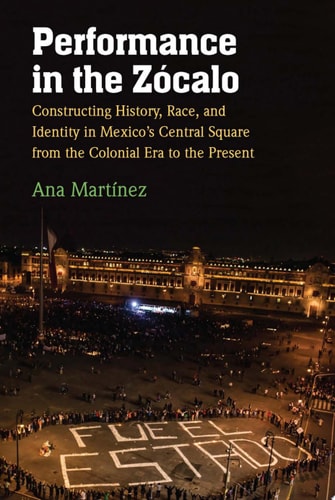
For more than five centuries, the Plaza Mayor (or Zócalo) in Mexico City has been the site of performances for a public spectatorship. During the period of colonial rule, performances designed to ensure loyalty to the Spanish monarchy were staged there, but over time, these displays gave way to staged demonstrations of resistance. Today, the Zócalo is a site for both official government-sponsored celebrations and performances that challenge the state. Performance in the Zócalo examines the ways that this city square has achieved symbolic significance over the centuries, and how national, ethnic, and racial identity has been performed there. A saying in Mexico City is “quien domina el centro, domina el país” (whoever dominates the center, dominates the country) as the Zócalo continues to act as the performative embodiment of Mexican society. This book highlights how particular performances build upon each other by recycling past architectures and performative practices for new purposes. Ana Martínez discusses the singular role of collective memory in creating meaning through space and landmarks, providing a new perspective and further insight into the problem of Mexico’s relationship with its own past. Rather than merely describe the commemorations, she traces the relationship between space and the invention of a Mexican imaginary. She also explores how indigenous communities, Mexico’s alienated subalterns, performed as exploited objects, exotic characters, and subjects with agency. The book’s dual purposes are to examine the Zócalo as Mexico’s central site of performance and to unmask, without homogenizing, the official discourse regarding Mexico’s natives. This book will be of interest for students and scholars in theater studies, Mexican Studies, Cultural Geography, Latinx and Latin American Studies.
Menrva's Summary
THE THESIS
The Zócalo in Mexico City has served as a central stage for performance and the construction of national identity for over five centuries. This book examines how the Plaza Mayor has evolved from a site of colonial loyalty displays to one of resistance and modern challenges to the state, exploring its symbolic significance in shaping national, ethnic, and racial identity. It highlights how performances recycle past practices and architectures to create new meanings, delving into the relationship between space, collective memory, and the invention of a Mexican imaginary. The work also investigates how indigenous communities have performed, both as subjects of exploitation and as agents of their own narratives, aiming to unmask official discourse surrounding Mexico's native populations.
THE SCOPE MAP
- Analysis of performances in Mexico City's Zócalo from the colonial era to the present.
- Examination of the Zócalo's role in constructing national, ethnic, and racial identity.
- Exploration of how the square has transitioned from displays of loyalty to demonstrations of resistance.
- Discussion of the recycling of past architectures and performative practices for contemporary purposes.
- Investigation into the role of collective memory in creating meaning through space and landmarks.
- Analysis of the relationship between space and the invention of a Mexican imaginary.
- Exploration of indigenous communities' performances as exploited objects, exotic characters, and subjects with agency.
- Unmasking official discourse regarding Mexico's native populations without homogenization.
THE AUTHORITY PERSPECTIVE
This book is positioned as a significant contribution to the study of performance, history, and identity in Mexico. Its detailed examination of the Zócalo's multifaceted role is likely to appeal to scholars and students in theater studies, Mexican Studies, Cultural Geography, and Latinx and Latin American Studies. The work's approach, which traces the invention of a Mexican imaginary through the performative embodiment of society, offers a unique perspective on the nation's relationship with its past. The analysis of indigenous representation within public performance spaces is particularly noted for its nuanced approach.
Page Count:
232
Publication Date:
2020-10-01
Publisher:
University of Michigan Press
ISBN-10:
0472127063
ISBN-13:
9780472127061
History
Non-Fiction
Performance Studies
Identity Studies
Community Tags
Similar Books