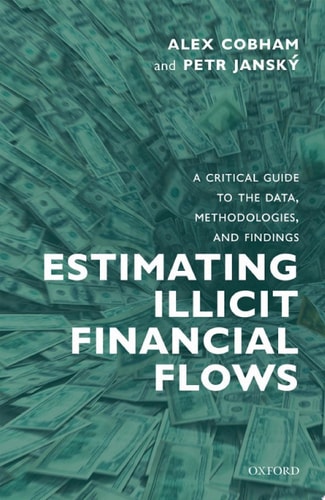
Estimating Illicit Financial Flows: A Critical Guide to the Data, Methodologies, and Findings
0
0
As an Amazon Associate and affiliate partner, Menrva Books earns from qualifying purchases. Learn more
Author Description
This is an open access title available under the terms of a CC BY-NC-ND 4.0 International licence. It is free to read at Oxford Scholarship Online and offered as a free PDF download from OUP and selected open access locations. Illicit financial flows constitute a global phenomenon of massive but uncertain scale, which erodes government revenues and drives corruption in countries rich and poor. In 2015, the countries of the world committed to a target to reduce illicit flows, as part of the UN Sustainable Development Goals. But five years later, there is still no agreement on how that target should be monitored or how it will be achieved. Illicit financial flows occur through many different channels, whether they involve laundering the proceeds of crime or shifting profits of multinational companies. These deliberately hidden cross-border movements of assets and income streams depend on a set of common tools including opaque company accounts, legal vehicles for anonymous ownership, and the secrecy jurisdictions that provide these series. The overall effect is to reduce the revenue available to states and to weaken the quality of governance - leading to less money to support human development, and a lower likelihood of funds being well spent. Estimating Illicit Financial Flows: A Critical Guide to the Data, Methodologies, and Findings is authored by two of the economists most closely involved in the process to develop UN indicators of illicit financial flows. In it, they offer a critical survey of the existing data and methodologies, identifying the most promising avenues for future improvement and setting out their own proposals. They cover a range of corrupt practices aimed at obtaining immunity or impunity from criminal law, from market regulation, and from taxation.
Menrva's Summary
THE THESIS
This book investigates the persistent challenge of measuring illicit financial flows (IFFs) and evaluates the efficacy of current methodologies used to track these global economic activities. Authors Alex Cobham and Petr Janský, both prominent economists involved in the development of UN indicators, synthesize existing data to address the lack of consensus regarding how to monitor progress toward Sustainable Development Goals. They argue that by identifying the limitations of current measurement tools, policymakers can better address the mechanisms of tax evasion, profit shifting, and money laundering that undermine state governance.
THE SCOPE MAP
What You Will Find
- A critical survey of existing data sources and measurement methodologies for IFFs.
- Analysis of the tools used for hidden cross-border asset movement, including opaque accounts and secrecy jurisdictions.
- Proposed frameworks for improving the accuracy of international financial monitoring.
Scope Limits
- The text focuses primarily on the technical and economic measurement of flows rather than providing a legal manual for prosecuting specific criminal cases.
- It does not provide an exhaustive list of every individual case of corruption but rather focuses on systemic, aggregate-level economic indicators.
THE AUTHORITY PERSPECTIVE
Experts recognize this work as a foundational text for understanding the complexities of global financial transparency and the technical hurdles of UN-level reporting. Readers frequently note the academic rigor of the prose, which serves as a primary resource for researchers and policymakers engaged in international development and tax policy.
Page Count:
224
Publication Date:
2020-01-01
Publisher:
OUP Oxford
ISBN-10:
0192596551
ISBN-13:
9780192596550
Economics
International Development
Finance
Public Policy
Taxation
Community Tags
Other Editions(2)
Similar Books



Reader Comments
Share Your Thoughts
No comments yet. Be the first to share your thoughts!