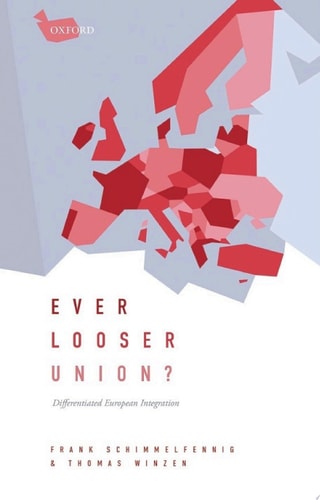
Ever Looser Union?: Differentiated European Integration
0
0
As an Amazon Associate and affiliate partner, Menrva Books earns from qualifying purchases. Learn more
Author Description
Differentiated integration has become a durable feature of the European Union and is a major alternative for its future development and reform. This book provides a comprehensive conceptual, theoretical, and empirical analysis of differentiation in European integration. It explains differentiation in EU treaties and legislation in general and offers specific accounts of differentiation in the recent enlargements of the EU, the Eurozone crisis, the Brexit negotiations, and the integration of non-member states. Ever Looser Union? introduces differentiated integration as a legal instrument that European governments use regularly to overcome integration deadlock in EU treaty negotiations and legislation. Differentiated integration follows two main logics. Instrumental differentiation adjusts integration to the heterogeneity of economic preferences and capacities, particularly in the context of enlargement. By contrast, constitutional differentiation accommodates concerns about national self-determination. Whereas instrumental differentiation mainly affects poorer (new) member states, constitutional differentiation offers wealthier and nationally oriented member states opt-outs from the integration of core state powers. The book shows that differentiated integration has facilitated the integration of new policies, new members, and even non-members. It has been mainly 'multi-speed' and inclusive. Most differentiations end after a few years and do not discriminate against member states permanently. Yet differentiation is less suitable for reforming established policies, managing disintegration and fostering solidarity, and the path-dependency of core state power integration may lead to permanent divides in the Union.
Menrva's Summary
THE THESIS
This book investigates whether differentiated integration serves as a functional mechanism for European Union development or as a catalyst for permanent fragmentation. Authors Frank Schimmelfennig and Thomas Winzen utilize a combination of legal analysis and political theory to argue that differentiation acts as a strategic tool for overcoming legislative deadlocks. By categorizing differentiation into instrumental and constitutional logics, the authors provide a framework for understanding how member states navigate the tension between integration and national sovereignty.
THE SCOPE MAP
What You Will Find
- Analysis of EU treaty negotiations and legislative processes
- A dual-logic framework distinguishing between instrumental and constitutional differentiation
- Empirical examination of the Eurozone crisis, Brexit, and EU enlargement
Scope Limits
- Does not provide a predictive model for the long-term dissolution of the Union
- Limited focus on the internal political dynamics of non-member states beyond their integration status
THE AUTHORITY PERSPECTIVE
Scholars of European integration identify this work as a primary reference for understanding the structural flexibility of the European Union. Readers frequently note the academic density of the prose, which is tailored for researchers and students of political science.
Page Count:
246
Publication Date:
2020-01-01
Publisher:
OUP Oxford
ISBN-10:
0192596330
ISBN-13:
9780192596338
European Union
International relations
Public Policy
Governance
European History
Community Tags
Similar Books