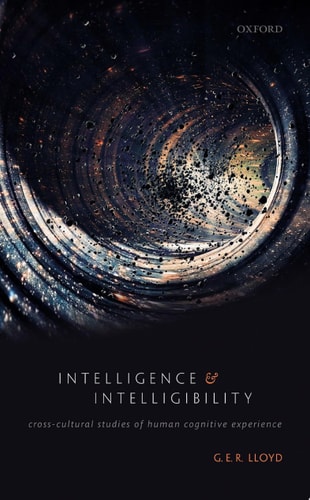
Intelligence and Intelligibility
0
0
As an Amazon Associate and affiliate partner, Menrva Books earns from qualifying purchases. Learn more
Author Description
Across Several Intellectual Disciplines There Exists A Tension Between An Appreciation Of The Cognitive Capacities That All Humans Share And A Recognition Of The Great Variety In Their Manifestations In Different Individuals And Groups. In This Book G. E. R. Lloyd Examines How, While Avoiding The Imposition Of Prior Western Assumptions And Concepts, We Can Reconcile Two Conflicting Intuitions: That All Humans Share The Same Basic Cognitive Capacities And Yet Their Actual Manifestations In Different Individuals And Groups Differ Appreciably. Lloyd Investigates The Cultural Viability Of Analytic Tools We Commonly Use (such As The Contrasts Between The Literal And The Metaphorical, Between Myth And Rational Account, And Between Nature And Culture Themselves) And The Categories That We Employ To Organize Human Experience (like Mathematics, Religion, Law, And Aesthetics). The End Result Is A Robust Defence, Within Limits, Of The Possibilities Of Mutual Intelligibility—one Which Recognizes Both The Diversity In The Manifestations Of Human Intelligence And The Need To Revise Our Assumptions In Order To Achieve That Understanding.
Menrva's Summary
THE THESIS
This book investigates the tension between the universal cognitive capacities shared by all humans and the significant diversity in how these capacities manifest across different cultures and individuals. G. E. R. Lloyd, a distinguished scholar of ancient science and philosophy, utilizes a comparative historical framework to examine how Western analytical categories shape our understanding of human intelligence. He argues that by critically re-evaluating our own conceptual tools, we can bridge the gap between diverse cultural expressions and achieve a degree of mutual intelligibility.
THE SCOPE MAP
What You Will Find
- A critical analysis of binary oppositions such as literal versus metaphorical and nature versus culture.
- An examination of organizational categories including mathematics, religion, law, and aesthetics.
- A comparative study of ancient Greek and Chinese intellectual traditions.
Scope Limits
- The text does not provide a comprehensive psychological model of cognition.
- It does not attempt to resolve all cultural misunderstandings but rather focuses on the philosophical possibility of intelligibility.
THE AUTHORITY PERSPECTIVE
Scholars frequently cite this work as a sophisticated contribution to comparative philosophy and the anthropology of knowledge. Readers often note the academic density of the prose, which requires a strong background in philosophical discourse to fully navigate the author's arguments.
Page Count:
176
Publication Date:
2020-01-01
Publisher:
Oxford University Press
ISBN-10:
0192596799
ISBN-13:
9780192596796
Philosophy
Epistemology
Anthropology
Community Tags
Similar Books