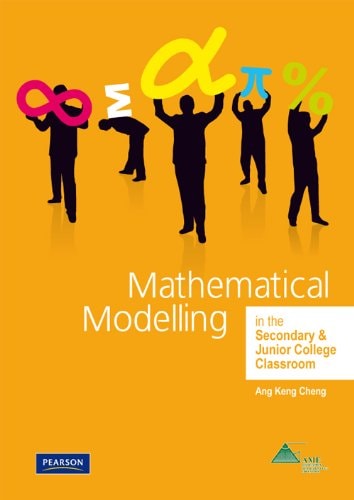
Mathematical Modelling in the Secondary & Junior College Classroom
0
0
As an Amazon Associate and affiliate partner, Menrva Books earns from qualifying purchases. Learn more
Author Description
Mathematical Modelling in the Secondary and Junior College Classroom is written primarily for the teacher who wishes to clue their students in to a world of numbers, figures and statistics outside the classroom, a view made possible through mathematical modelling. Mathematical modelling is a wide and exciting field that cuts across a variety of topics and disciplines. Besides teachers, this book is also for the novice looking for a practical introduction to the essential and fundamental ideas of mathematical modelling: the window to the real world of maths. Salient Features: 1. Fundamental principles and concepts are introduced, together with basic skills and techniques required in common modelling problems. 2. Different approaches in mathematical modelling are presented in detail through tried-and-tested worked examples. 3. Several possible student projects are suggested along with notes to guide the teacher. Chapter 1 Introduction Chapter 2 Modelling Skills & Tools Chapter 3 Worked Examples Chapter 4 Possible Modelling Projects Chapter 5 Teacher Notes Chapter 6 Presentations, Reports & Assessments Chapter 7 Resources
Menrva's Summary
THE THESIS
This book introduces teachers and novices to the principles and practices of mathematical modelling as a tool for connecting classroom mathematics to the real world. It aims to equip educators with the fundamental concepts, skills, and techniques necessary for guiding students through modelling problems, presenting various approaches with detailed worked examples. The text also suggests student projects and provides guidance for teachers on presentations, assessments, and resources, serving as a practical introduction to the field.
THE SCOPE MAP
- Fundamental principles and concepts of mathematical modelling
- Basic skills and techniques for common modelling problems
- Different approaches to mathematical modelling presented through worked examples
- Suggestions for student projects with teacher guidance
- Guidance for teachers on presentations, reports, and assessments
- Resources for further exploration of mathematical modelling
THE AUTHORITY PERSPECTIVE
The book is designed as a practical guide for secondary and junior college teachers seeking to demonstrate the real-world applications of mathematics through modelling. It focuses on foundational principles, skills, and techniques, supported by worked examples and project suggestions. The structure includes specific chapters on modelling skills, worked examples, potential projects, teacher notes, and assessment strategies, indicating a pedagogical focus aimed at educators.
Page Count:
73
Publication Date:
2009-01-01
Publisher:
Prentice Hall
ISBN-10:
981068150X
ISBN-13:
9789810681500
Science & Technology
Non-Fiction
Education
Mathematics
Pedagogy
Community Tags
Similar Books