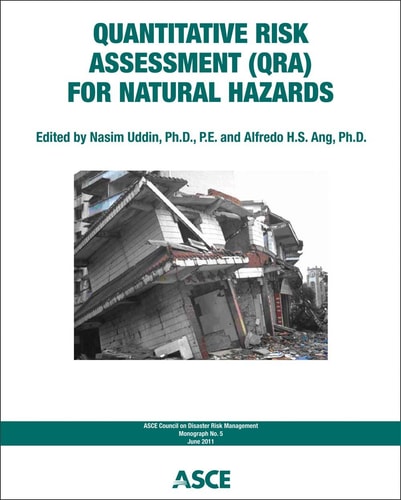
Quantitative Risk Assessment for Natural Hazards
0
0
As an Amazon Associate and affiliate partner, Menrva Books earns from qualifying purchases. Learn more
Author Description
Prepared by the Council on Disaster Risk Management of ASCE. Quantitative Risk Assessment for Natural Hazards explains the practical aspects of using quantitative risk assessment (QRA) to develop optimal engineering designs that mitigate the effects of natural hazards, especially on civil infrastructure. Risk analysis of any asset cannot be considered complete without consideration of natural hazards. QRA involves determining the probability of a hazard occurring and estimating the consequences. This monograph demonstrates methods for calculating the vulnerability of infrastructure assets to the common natural hazards-earthquakes, hurricanes, tornadoes, and floods-as well as less-frequent events, such as ice storms, extreme cold, wildfires, avalanches, landslides, mud slides, and tsunamis. Chapters describe QRA for two types of asset (dams and bridges) and three hazards (wind, earthquakes, and hurricanes). Another chapter presents an all-hazards methodology for critical asset and portfolio risk analysis. This CDRM Monograph is a valuable reference for engineers involved in safeguarding infrastructure from natural hazards, risk assessment, disaster management, engineering mechanics, and structural engineering, as well as for engineers and government officials tasked with homeland security.
Menrva's Summary
THE THESIS
This monograph details the application of quantitative risk assessment (QRA) to mitigate the impact of natural hazards on civil infrastructure. The authors, affiliated with the Council on Disaster Risk Management of ASCE, explain how QRA, by determining hazard probability and estimating consequences, is crucial for complete risk analysis. The book demonstrates methods for calculating the vulnerability of infrastructure assets to a wide range of natural hazards, from common events like earthquakes and hurricanes to less frequent occurrences such as landslides and tsunamis. It provides specific QRA applications for dams and bridges against wind, earthquakes, and hurricanes, and introduces an all-hazards methodology for critical asset and portfolio risk analysis.
THE SCOPE MAP
- Methods for calculating infrastructure vulnerability to common natural hazards (earthquakes, hurricanes, tornadoes, floods).
- Analysis of less-frequent natural hazards including ice storms, extreme cold, wildfires, avalanches, landslides, mud slides, and tsunamis.
- Specific Quantitative Risk Assessment (QRA) applications for dams.
- Specific Quantitative Risk Assessment (QRA) applications for bridges.
- QRA methodologies for wind, earthquakes, and hurricanes.
- An all-hazards methodology for critical asset and portfolio risk analysis.
THE AUTHORITY PERSPECTIVE
This monograph is presented as a valuable reference for engineers involved in safeguarding infrastructure from natural hazards, risk assessment, disaster management, engineering mechanics, and structural engineering. It is also targeted towards engineers and government officials tasked with homeland security. The content focuses on the practical aspects of using QRA to develop optimal engineering designs. The book aims to provide engineers with the tools to understand and mitigate the effects of natural hazards on civil infrastructure.
Page Count:
87
Publication Date:
2011-01-01
Publisher:
ASCE
ISBN-10:
0784411530
ISBN-13:
9780784411537
Science & Technology
Non-Fiction
Engineering
Community Tags
Similar Books