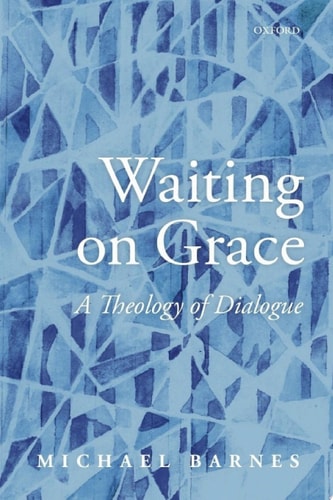
Waiting on Grace: A Theology of Dialogue
0
0
As an Amazon Associate and affiliate partner, Menrva Books earns from qualifying purchases. Learn more
Author Description
Whereas much theology of religions regards 'the other' as a problem to be solved, this book begins with a Church called to witness to its faith in a multicultural world by practising a generous yet risky hospitality. A theology of dialogue takes its rise from the Christian experience of being-in-dialogue. Taking its rise from the biblical narrative of encounter, call and response, such a theology cannot be fully understood without reference to the matrix of faith that Christians share in complex ways with the Jewish people. The contemporary experience of the Shoah, the dominating religious event of the 20th Century, has complexified that relationship and left an indelible mark on the religious sensibility of both Jews and Christians. Engaging with a range of thinkers, from Heschel, Levinas and Edith Stein who were all deeply affected by the Shoah, to Metz, Panikkar and Rowan Williams, who are always pressing the limits of what can and cannot be said with integrity about the self-revealing Word of God, this book shows how Judaism is a necessary, if not sufficient, source of Christian self-understanding. What is commended by this foundational engagement is a hope-filled 'waiting on grace' made possible by virtues of empathy and patience. A theology of dialogue focuses not on metaphysical abstractions but on biblical forms of thought about God's presence to human beings which Christians share with Jews and, under the continuing guidance of the Spirit of Christ, learn to adapt to a whole range of contested cultural and political contexts.
Menrva's Summary
THE THESIS
This book investigates how the Christian practice of interfaith dialogue, particularly with Judaism, serves as a foundational framework for understanding the self-revealing Word of God in a multicultural world. Michael Barnes, a scholar of theology and interreligious relations, utilizes biblical narratives and the historical weight of the Shoah to argue that Christian identity is inextricably linked to its relationship with the Jewish people. By moving away from metaphysical abstractions, the author proposes a theology rooted in the virtues of empathy, patience, and a hope-filled 'waiting on grace' within contested cultural contexts.
THE SCOPE MAP
What You Will Find
- Analysis of the biblical narrative of encounter, call, and response.
- Engagement with the philosophical and theological works of Heschel, Levinas, Edith Stein, Metz, Panikkar, and Rowan Williams.
- Examination of the impact of the Shoah on modern Jewish-Christian relations.
- A framework for practicing hospitality and dialogue in diverse religious environments.
Scope Limits
- The text does not provide a comprehensive history of all world religions, focusing primarily on the Jewish-Christian matrix.
- It does not offer a definitive resolution to all political or cultural conflicts, but rather a theological approach to engagement.
THE AUTHORITY PERSPECTIVE
Scholars and theologians frequently note the academic density of the prose and the depth of the author's engagement with post-Shoah thought. Experts highlight this as a significant contribution to the field of interreligious dialogue, particularly for those interested in the intersection of biblical studies and contemporary ethics.
Page Count:
264
Publication Date:
2020-01-01
Publisher:
OUP Oxford
ISBN-10:
0192590928
ISBN-13:
9780192590923
Religion
Christianity
Judaism relations christianity
Philosophy of
Judaism
Interfaith Dialogue
Christianity and other religions
Theology
Community Tags
Similar Books