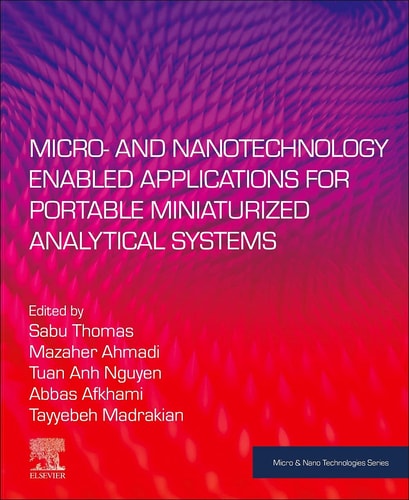
Micro- and Nanotechnology Enabled Applications for Portable Miniaturized Analytical Systems
0
0
As an Amazon Associate and affiliate partner, Menrva Books earns from qualifying purchases. Learn more
Author Description
Micro- and Nanotechnology Enabled Applications for Portable Miniaturized Analytical Systems outlines the basic principles of miniaturized analytical devices, such as spectrometric, separation, imaging and electrochemical miniaturized instruments. Concepts such as smartphone-enabled miniaturized detection systems and micro/nanomachines are also reviewed. Subsequent chapters explore the emerging application of these mobile devices for miniaturized analysis in various fields, including medicine and biomedicine, environmental chemistry, food chemistry, and forensic chemistry. This is an important reference source for materials scientists and engineers wanting to understand how miniaturization techniques are being used to create a range of efficient, sustainable electronic and optical devices. Miniaturization describes the concept of manufacturing increasingly smaller mechanical, optical, and electronic products and devices. These smaller instruments can be used to produce micro- and nanoscale components required for analytical procedures. A variety of micro/nanoscale materials have been synthesized and used in analytical procedures, such as sensing materials, sorbents, adsorbents, catalysts, and reactors. The miniaturization of analytical instruments can be applied to the different steps of analytical procedures, such as sample preparation, analytical separation, and detection, reducing the total cost of manufacturing the instruments and the needed reagents and organic solvents.
Menrva's Summary
THE THESIS
This book investigates how micro- and nanotechnology are revolutionizing portable analytical systems. It details the fundamental principles behind miniaturized analytical devices, including spectrometric, separation, imaging, and electrochemical instruments, and reviews concepts like smartphone-enabled detection and micro/nanomachines. The text further explores the applications of these mobile devices in diverse fields such as medicine, environmental science, food chemistry, and forensic chemistry, highlighting the efficiency and sustainability benefits of miniaturization in analytical procedures.
THE SCOPE MAP
- Principles of miniaturized analytical devices (spectrometric, separation, imaging, electrochemical)
- Concepts of smartphone-enabled miniaturized detection systems
- Review of micro/nanomachines
- Applications in medicine and biomedicine
- Applications in environmental chemistry
- Applications in food chemistry
- Applications in forensic chemistry
- Use of micro/nanoscale materials (sensing, sorbents, catalysts, reactors)
THE AUTHORITY PERSPECTIVE
The book serves as an important reference for materials scientists and engineers focused on miniaturization techniques for electronic and optical devices. It details how smaller instruments and micro/nanoscale materials are synthesized and applied to analytical procedures, covering sample preparation, separation, and detection. The text emphasizes the reduction in manufacturing costs and the decreased need for reagents and organic solvents associated with miniaturized analytical systems.
Page Count:
438
Publication Date:
2021-10-19
Publisher:
Elsevier Science
ISBN-10:
0128237279
ISBN-13:
9780128237274
Science
Non-Fiction
Analytical Chemistry
Nanotechnology
Community Tags
Similar Books