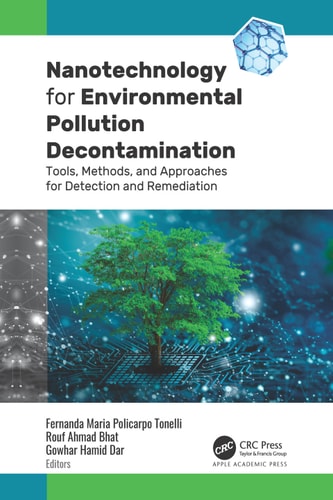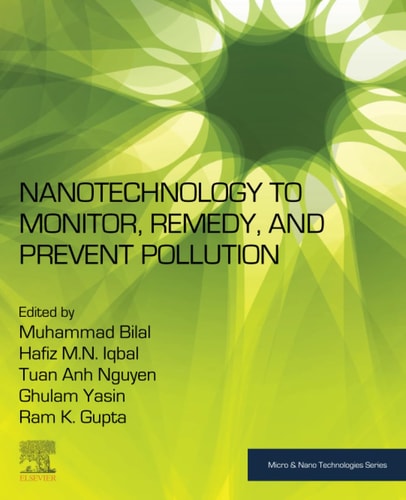
Nanotechnology to Monitor, Remedy, and Prevent Pollution
0
0
As an Amazon Associate and affiliate partner, Menrva Books earns from qualifying purchases. Learn more
Author Description
For decades an increasingly rapid urbanization pace, modern industrial development, and constantly intensive agricultural practices have caused controlled or uncontrolled release of hazardous contaminants that seriously threaten our environment. All natural spheres (atmosphere, hydrosphere, biosphere, lithosphere, and anthroposphere) seem to have been exposed to harmful practices and emerging research in nanomaterials is now trying to combat their adverse impact on physical ecosystems and organisms, as well as human health. In this context, pollution remediation at the nanoscale has come to the forefront for its potential to unlock sustainable, highly efficient, and cost-effective technologies, capable to restore in situ or ex situ land, water, and air resources. Nanotechnology to Monitor, Remedy, and Prevent Pollution covers design, fabrication, and extensive applications of engineered nanostructured materials in various shapes and morphologies (such as nanoparticles, wires, tubes, fibres) that, because of their size, surface-to-volume ratio, and high reactivity, function as catalysts and adsorbents of organic pollutants (aliphatic and aromatic hydrocarbons), gases, chemicals (arsenic, manganese, iron, nitrate, heavy metals), antibiotics, and biological entities (bacteria, viruses, parasites). Their integration with biotechnological processes for monitoring and prevention of pollution is also explored alongside the invisible dangers caused by noise. This is a valuable book for academics, researchers, undergraduate and postgraduate students working on environmental engineering for sustainability, environmental sciences, biotechnology, and nanotechnology.
Menrva's Summary
THE THESIS
Engineered nanostructured materials offer a promising frontier in combating environmental pollution. The book explores the design, fabrication, and application of these materials, such as nanoparticles and nanotubes, which leverage their unique size and reactivity to act as catalysts and adsorbents for a wide range of contaminants including hydrocarbons, gases, heavy metals, and biological agents. It investigates how nanotechnology can be integrated with biotechnological processes for monitoring and preventing pollution, addressing the environmental threats posed by rapid urbanization and industrial development.
THE SCOPE MAP
- Design, fabrication, and applications of engineered nanostructured materials.
- Nanomaterials as catalysts and adsorbents for organic pollutants, gases, and chemicals.
- Remediation of heavy metals, arsenic, manganese, iron, and nitrate using nanotechnology.
- Application of nanomaterials for controlling antibiotics and biological entities like bacteria and viruses.
- Integration of nanotechnology with biotechnological processes for pollution monitoring and prevention.
- Exploration of the invisible dangers caused by noise pollution.
- Focus on sustainable, efficient, and cost-effective pollution remediation technologies.
THE AUTHORITY PERSPECTIVE
This book is positioned as a valuable resource for academics, researchers, and students in environmental engineering, environmental science, biotechnology, and nanotechnology. The content addresses the critical need for advanced solutions to environmental contamination stemming from industrial and agricultural practices. Its focus on nanoscale remediation suggests a detailed examination of cutting-edge scientific approaches to restoring ecosystems and protecting human health.
Page Count:
684
Publication Date:
2024-06-06
Publisher:
Elsevier Science
ISBN-10:
0443156603
ISBN-13:
9780443156601
Non-Fiction
Science
Pollution Control
Nanotechnology
Sustainability
Community Tags
Similar Books