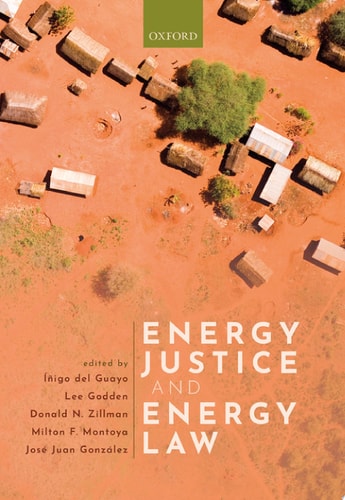
Energy Justice and Energy Law
0
0
As an Amazon Associate and affiliate partner, Menrva Books earns from qualifying purchases. Learn more
Author Description
Energy Justice Has Emerged Over The Last Decade As A Matter Of Vital Concern In Energy Law, Which Can Be Seen In The Attention Directed To Energy Poverty, And The United Nations Sustainable Development Goals. There Are Energy Justice Concerns In Areas Of Law As Diverse As Human Rights, Consumer Protection, International Law And Trade, And In Many Forms Of Regional And National Energy Law And Regulation. This Edited Collection Explores In Detail At Four Kinds Of Energy Justice. The First, Distributive Justice, Relates To The Equitable Distribution Of The Benefits And Burdens Of Energy Activities, Which Is Challenged By The Existence Of People Suffering From Energy Poverty. Secondly, Procedural (or Participation) Justice Consists Of The Right Of All Communities To Participate In Decision-making Regarding Energy Projects And Policies That Affect Them. This Dimension Of Energy Justice Often Includes Procedural Rights To Information And Access To Courts. Under The Concept Of Reparation (or Restorative) Justice, The Book Looks At Even-handed Enforcement Of Energy Statutes And Regulations, As Well As Access To Remedies When Legal Rights Are Violated. Finally, The Collection Addresses Social Justice, With The Recognition That Energy Injustice Cannot Be Separated From Other Social Ills, Such As Poverty And Subordination Based On Race, Gender, Or Indigeneity. These Issues Feed Into A Wider Conversation About How We Achieve A 'just' Energy Transition, As The World Confronts The Urgent Challenges Of Climate Change.
Menrva's Summary
THE THESIS
This collection investigates how the principles of energy justice can be integrated into legal frameworks to address global inequities in energy access and transition. The editors, a diverse group of international legal scholars, synthesize academic research and regulatory analysis to argue that energy law must evolve beyond technical efficiency to incorporate human rights, equity, and procedural fairness. By examining the intersection of energy policy with broader social concerns, the text provides a structured approach for legal practitioners and policymakers to evaluate the fairness of energy systems.
THE SCOPE MAP
What You Will Find
- A four-part framework covering distributive, procedural, restorative, and social justice in energy law.
- Analysis of energy poverty and its relationship to the United Nations Sustainable Development Goals.
- Examination of legal mechanisms for public participation and access to courts in energy project decision-making.
- Comparative perspectives on regional and national energy regulations.
Scope Limits
- The text does not provide a technical manual for engineering or specific energy infrastructure construction.
- It does not offer a singular, universal policy solution but rather a conceptual framework for legal analysis.
THE AUTHORITY PERSPECTIVE
Legal scholars and policy experts recognize this volume as a comprehensive reference for understanding the intersection of human rights and energy regulation. Readers frequently note the academic density of the prose, which serves as a foundational resource for those studying the legal dimensions of the global energy transition.
Page Count:
384
Publication Date:
2020-01-01
Publisher:
Oxford University Press
ISBN-10:
0192604821
ISBN-13:
9780192604828
Energy policy
Law
Social justice
Human rights
Public Policy
Community Tags
Similar Books