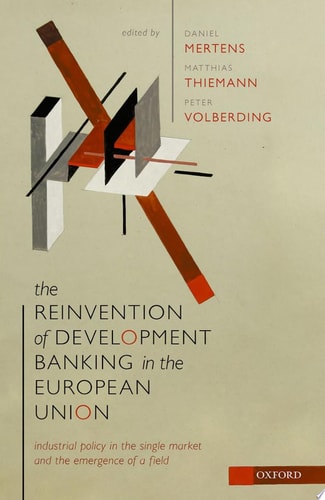
The Reinvention of Development Banking in the European Union
0
0
As an Amazon Associate and affiliate partner, Menrva Books earns from qualifying purchases. Learn more
Author Description
National Development Banks (ndbs) Have Transformed From Outdated Relics Of National Industrial Policy To Central Pillars Of The European Union's Economic Project. This Trend, Which Accelerated After The Financial Crisis Of 2007, Has Led To A Proliferation Of Ndbs With An Expanded Size And Scope. However, It Is Surprising That The Eu — Which Has Championed Market-oriented Governance And Strict Competition Policy — Has Actually Advocated For An Expansion Of Ndbs. This Book Therefore Asks, Why Has The Eu Supported An Increased Role For Ndbs, And How Can We Understand The Dynamics Between Ndbs And European Incentives And Constraints? To Answer These Questions, The Contributing Authors Analyze The Formation And Evolution Of A Field Of Development Banking Within The Eu, Identifying A New Field Around An Innovative Conceptualization Of State-backed Financing For The Purposes Of Policy Implementation. Yet Rather Than Focusing Solely On National Development Banks, The Authors Instead Broaden The Focus To The Entire Ecosystem Of The Field Of Development Banking, Which Includes Political Institutions (both In Brussels And In The Member States), Financing Vehicles (such As The Juncker Plan), Regulatory Bodies (directorate-general For Competition, Directorate-general For Economic And Financial Affairs), And Commercial Actors. Seven In-depth Case Studies On European Ndbs, Along With Three Chapters On European-level Actors, Detail This Field Of Development Banking, And Answer The Questions Of When, Where, And How Development Banking Occurs Within The Eu.
Menrva's Summary
THE THESIS
This book investigates the paradoxical expansion of National Development Banks (NDBs) within the European Union, a political entity traditionally committed to market-oriented governance and strict competition policy. The authors, Daniel Mertens, Matthias Thiemann, and Peter Volberding, utilize a field-theoretic approach to examine how these state-backed financial institutions have evolved from national industrial policy relics into central pillars of the EU's economic strategy. By analyzing the interplay between political institutions, regulatory bodies, and financing vehicles, the text argues that a distinct field of development banking has emerged to facilitate policy implementation across member states.
THE SCOPE MAP
What You Will Find
- Analysis of the ecosystem surrounding development banking, including the Juncker Plan and various EU directorates.
- Seven in-depth case studies of specific European National Development Banks.
- A conceptual framework for understanding state-backed financing within a supranational regulatory environment.
Scope Limits
- The text does not provide a comprehensive history of individual banking institutions prior to the 2007 financial crisis.
- The analysis is restricted to the European Union context and does not compare these findings to development banking models in emerging markets or Asia.
THE AUTHORITY PERSPECTIVE
Experts identify this work as a significant contribution to the study of European political economy and institutional change. Readers frequently note the academic density of the prose, which is well-suited for scholars and policy analysts interested in the intersection of state intervention and market regulation.
Page Count:
240
Publication Date:
2021-01-01
Publisher:
Oxford University Press
ISBN-10:
0192603523
ISBN-13:
9780192603524
Economics
Public Policy
Finance
Banking
European Union
Community Tags
Similar Books