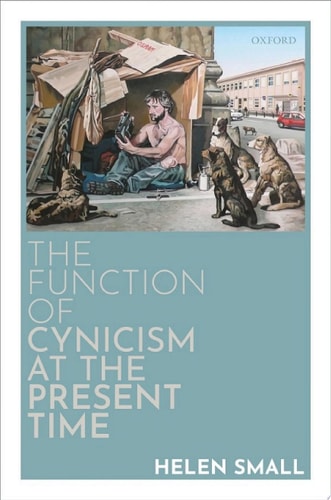
The Function of Cynicism at the Present Time
0
0
As an Amazon Associate and affiliate partner, Menrva Books earns from qualifying purchases. Learn more
Author Description
Cynicism is usually seen as a provocative mode of dissent from conventional moral thought, casting doubt on the motives that guide right conduct. When critics today complain that it is ubiquitous but lacks the serious bite of classical Cynicism, they express concern that it can now only be corrosively negative. The Function of Cynicism at the Present Time takes a more balanced view. Re-evaluating the role of cynicism in literature, cultural criticism, and philosophy from 1840 to the present, it treats cynic confrontationalism as a widely-employed credibility-check on the promotion of moral ideals--with roots in human psychology. Helen Small investigates how writers have engaged with Cynic traditions of thought, and later more gestural styles of cynicism, to re-calibrate dominant moral values, judgements of taste, and political agreements. The argument develops through a series of cynic challenges to accepted moral thinking: Friedrich Nietzsche on morality; Thomas Carlyle v. J. S. Mill on the permissible limits of moral provocation; Arnold on the freedom of criticism; George Eliot and Ford Madox Ford on cosmopolitanism; Bertrand Russell, John Dewey, and Laura Kipnis on the conditions of work in the university. The Function of Cynicism treats topics of present-day public concern: abrasive styles of public argument; debasing challenges to conventional morality; free speech, moral controversialism; the authority of reason and the limits of that authority; nationalism and resistance to nationalism; and liberty of expression as a core principle of the university.
Menrva's Summary
THE THESIS
This book investigates whether cynicism functions as a constructive mechanism for moral critique rather than merely a corrosive force in contemporary discourse. Helen H. Small, a professor of English literature, utilizes a historical and philosophical framework to analyze how cynicism has evolved from classical roots into modern modes of dissent. By examining the intersection of literature, philosophy, and cultural criticism, the author argues that cynicism serves as a necessary credibility-check on the promotion of moral ideals and political consensus.
THE SCOPE MAP
What You Will Find
- Analysis of cynicism from 1840 to the present day
- Comparative studies of thinkers including Nietzsche, Carlyle, Mill, Arnold, Eliot, Ford, Russell, and Dewey
- Examination of cynicism within the context of university work and free speech
- Exploration of the relationship between human psychology and confrontational rhetoric
Scope Limits
- The text does not provide a comprehensive history of ancient Cynicism as a school of philosophy
- It does not offer a prescriptive guide for resolving contemporary political polarization
THE AUTHORITY PERSPECTIVE
Scholars and critics recognize this work as a rigorous intellectual history that successfully reclaims cynicism from its purely negative connotations. Readers frequently note the academic density of the prose, which demands familiarity with the philosophical figures discussed.
Page Count:
280
Publication Date:
2020-01-01
Publisher:
OUP Oxford
ISBN-10:
0192606522
ISBN-13:
9780192606525
Philosophy
English
Ethics
In literature
Literary Criticism
English & College Success
Intellectual History
Community Tags
Similar Books