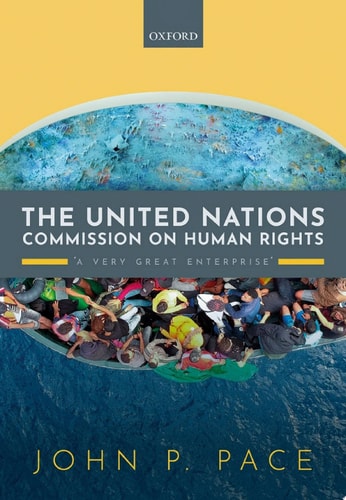
The United Nations Commission on Human Rights: 'A Very Great Enterprise'
0
0
As an Amazon Associate and affiliate partner, Menrva Books earns from qualifying purchases. Learn more
Author Description
In this book, John P. Pace provides the most complete account to-date of the United Nations human rights programme, both in substance and in chronological breadth. Pace worked at the heart of this programme for over thirty years, including as the Secretary of the Commission on Human Rights, and Coordinator of the World Conference on Human Rights, which took place in Vienna in 1993. He traces the issues taken up by the Commission after its launch in 1946, and the methods undertaken to enhance absorption and domestication of international human rights standards. He lays out the special procedures carried out by the UN, and the emergence of international human rights law. The book then turns to the establishment of the Office of the High Commissioner for Human Rights and the mainstreaming of human rights across the United Nations system, eventually leading to the establishment of the Human Rights Council to replace the Commission in 2006. Many of the problems we face today, including conflict, poverty, and environmental issues, have their roots in human rights problems. This book identifies what has been done at the international level in the past, and points towards what still needs to be done for the future.
Menrva's Summary
THE THESIS
This book investigates the historical evolution, operational mechanisms, and institutional legacy of the United Nations Commission on Human Rights from its inception in 1946 to its transition into the Human Rights Council in 2006. John P. Pace, a former Secretary of the Commission and Coordinator of the 1993 World Conference on Human Rights, utilizes his extensive internal experience to construct a comprehensive record of the organization. He argues that understanding the historical development of international human rights standards is necessary to address contemporary global challenges such as poverty and conflict. The text serves as both a chronological history and an analytical framework for the domestication of international law.
THE SCOPE MAP
What You Will Find
- Detailed history of the UN human rights programme from 1946 to 2006
- Analysis of the special procedures and mechanisms used to implement human rights standards
- Documentation of the transition from the Commission on Human Rights to the Human Rights Council
- Insights into the mainstreaming of human rights across the broader UN system
Scope Limits
- The text focuses primarily on the institutional and procedural history rather than a sociological analysis of human rights impact on individual citizens
- It does not provide an exhaustive critique of modern human rights failures post-2006
THE AUTHORITY PERSPECTIVE
Experts recognize this work as a primary source document due to the author's direct involvement in the Commission's operations for over three decades. Readers frequently note the high level of institutional detail, making it a foundational text for scholars of international law and organizational history.
Page Count:
873
Publication Date:
2020-01-01
Publisher:
OUP Oxford
ISBN-10:
0192608231
ISBN-13:
9780192608239
History
United Nations
International relations
Professional Career & Trade
Human rights
Community Tags
Similar Books