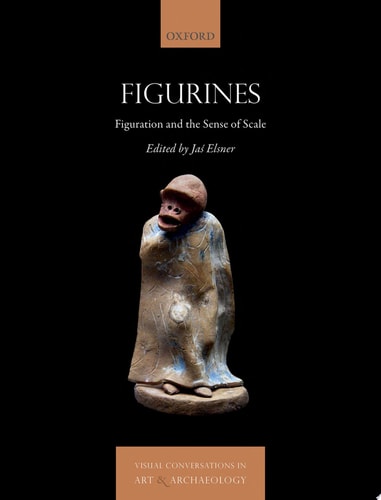
Figurines
0
0
As an Amazon Associate and affiliate partner, Menrva Books earns from qualifying purchases. Learn more
Author Description
Figurines Are Objects Of Handling. As Touchable Objects, They Engage The Viewer In Different Ways From Flat Art, Whether Relief Sculpture Or Painting. Unlike The Voyeuristic Relationship Of Viewing A Neatly Framed Pictorial Narrative As If From The Outside, The Viewer As Handler Is Always Potentially And Without Protection Within The Narrative Of Figurines. As Such, They Have Potential For A Potent, Even Animated, Agency In Relation To Those Who Use Them. This Volume Concerns Figurines As Archaeologically-attested Materials From Literate Cultures With Surviving Documents That Have No Direct Links Of Contiguity, Appropriation, Or Influence In Relation To Each Other. It Is An Attempt To Put The Category Of The Figurine On The Table As A Key Conceptual And Material Problematic In The Art History Of Antiquity. It Does So Through Comparative Juxtaposition Of Close-focused Chapters Drawn From Deep Art-historical Engagement With Specific Ancient Cultures - Chinese, Pre-columbian Mesoamerican, And Greco-roman. It Encourages Comparative Conversation Across The Disciplines That Constitute The Art History Of The Ancient World Through Finding Categories And Models Of Discourse That May Offer Fertile Ground For Comparison And Antithesis. It Extends The Rich And Astute Literature On Prehistoric Figurines Into Understanding The Figurine In Historical Contexts, Where Literary Texts And Documents, Inscriptions, Or Surviving Terminologies Can Be Adduced Alongside Material Culture. At Stake Are Issues Of Figuration And Anthropomorphism, Miniaturization And Portability, One-off Production And Replication, And Substitution And Scale At The Interface Of Archaeology And Art History.
Menrva's Summary
THE THESIS
This volume investigates how figurines function as distinct, tactile objects that demand a different mode of engagement than flat art, positioning them as a central problematic in the art history of antiquity. Jaś Elsner, an established scholar in art history and classical studies, utilizes a comparative framework to analyze figurines across disparate ancient cultures. By examining Chinese, Pre-Columbian Mesoamerican, and Greco-Roman artifacts, the author argues that the physical handling of these objects creates a unique agency that bridges the gap between the viewer and the narrative. The work seeks to establish a new conceptual category for figurines that integrates archaeological evidence with surviving literary and documentary records.
THE SCOPE MAP
What You Will Find
- Comparative analysis of figurines from Chinese, Pre-Columbian Mesoamerican, and Greco-Roman cultures.
- Theoretical frameworks for understanding anthropomorphism, miniaturization, and portability in ancient art.
- Methodologies for integrating material culture with textual evidence and inscriptions.
Scope Limits
- The study focuses on literate cultures with surviving documentation, excluding prehistoric contexts that lack such records.
- The analysis does not attempt to trace direct lines of influence or appropriation between the chosen cultures.
THE AUTHORITY PERSPECTIVE
Scholars recognize this text as a significant contribution to the study of material culture and the art history of the ancient world. Readers frequently note the academic density of the prose and the rigor with which the author applies comparative methodology to disparate historical traditions.
Page Count:
192
Publication Date:
2020-01-01
Publisher:
Oxford University Press
ISBN-10:
0192605283
ISBN-13:
9780192605283
Academic
Archaeology
Antiquity
Art History
Anthropology
Community Tags
Similar Books