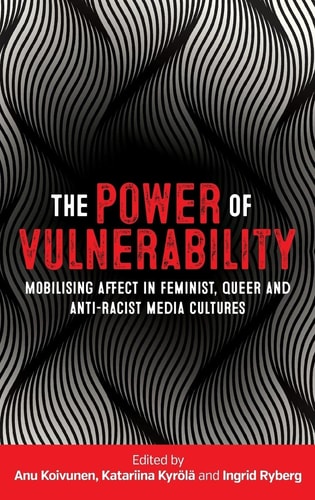
The Power of Vulnerability: Mobilising Affect in Feminist, Queer and Anti-racist Media Cultures
0
0
As an Amazon Associate and affiliate partner, Menrva Books earns from qualifying purchases. Learn more
Author Description
In popular campaigns such as #MeToo and #TimesUp, questions of power and agency are increasingly discussed as issues of injury or empowerment. Vulnerability has emerged as a key concept in these discussions and their academic analyses. This book investigates the historical legacies and contemporary forms and effects of the language of vulnerability. In today's media culture, traumatic first-person or group narratives have popular currency, mobilising affect, from compassion to rage, in order to gain visibility and political advantage. Vulnerability is seen as a kind of capital; not only as victimhood but also as a resource that can be adopted for various purposes. Contributors to the book, including Jack Halberstam and Sara Ahmed, examine how affect and vulnerability not only reveal but also obscure asymmetries of power, how media activism and state policies address so-called vulnerable groups, and how we determine whose vulnerability counts as socially and culturally legible. Providing keen insights into the political potential as well as the constraints of vulnerability for feminist, queer and anti-racist criticism, the book will be of interest to scholars and students in media and cultural studies, affect theory, gender studies, queer theory and critical race studies.
Menrva's Summary
THE THESIS
This book examines the complex role of vulnerability in contemporary media cultures, particularly within feminist, queer, and anti-racist movements. It investigates how the language of vulnerability, amplified by campaigns like #MeToo and #TimesUp, is utilized to mobilize affect, gain visibility, and achieve political advantage. The contributors explore how vulnerability can function as a form of capital, revealing and obscuring power dynamics, and question whose vulnerability is deemed legible in society.
THE SCOPE MAP
- Analysis of historical legacies and contemporary forms of vulnerability in media.
- Examination of how traumatic first-person or group narratives mobilize affect (compassion, rage).
- Discussion of vulnerability as a form of capital, extending beyond mere victimhood.
- Exploration of how media activism and state policies address 'vulnerable groups'.
- Investigation into the criteria for determining socially and culturally legible vulnerability.
- Insights into the political potential and constraints of vulnerability for critical analyses.
- Contributions from notable scholars such as Jack Halberstam and Sara Ahmed.
THE AUTHORITY PERSPECTIVE
The book is positioned as a valuable resource for scholars and students in media and cultural studies, affect theory, gender studies, queer theory, and critical race studies. Its examination of vulnerability as a political tool and a form of capital offers keen insights into contemporary social movements. The contributors' analysis of how vulnerability can both reveal and obscure power asymmetries is a central theme. The work is likely to stimulate discussion on the efficacy and implications of leveraging vulnerability in activism and policy.
Page Count:
246
Publication Date:
2018-01-01
Publisher:
Manchester University Press
ISBN-10:
1526133091
ISBN-13:
9781526133090
Non-Fiction
Queer Theory
Affect Theory
Feminist Theory
Media Studies
Community Tags
Similar Books