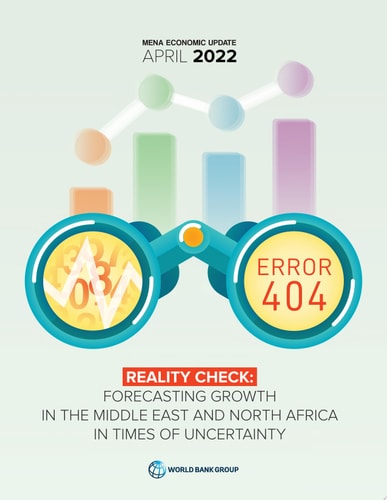
Reality Check: Forecasting Growth in the Middle East and North Africa in Times of Uncertainty
0
0
As an Amazon Associate and affiliate partner, Menrva Books earns from qualifying purchases. Learn more
Author Description
The Middle East and North Africa economies face an uncertain recovery. The war in Ukraine presents significant challenges to the global economy and the MENA region. Inflationary pressures brought about by the pandemic are likely to be further exacerbated by the conflict. The potential for rising food prices is even higher, which is likely to hurt the wallets of the poor and vulnerable in the region. The COVID-19 pandemic continues to cast a shadow. As the latest variant sweeps over the region, countries grapple with a host of problems depending on initial conditions and policy priorities. The region, like the rest of the world, is not out of the woods yet. Vaccinations remain the effective path out of the pandemic, leading to lower hospitalizations and death rates. Testing helps curb the spread. During times of uncertainty, it is important to not be overconfident about the region’s growth prospects. Growth forecasts serve as a significant signpost for policymakers to chart a path forward. Over the last decade, growth forecasts in the MENA region have often been inaccurate and overly optimistic, which can lead to economic contractions down the road due to ebullient borrowing. There is considerable room for the region to improve its forecasts that are largely hindered by opaque data systems, growth volatility and conflict. The MENA region lags considerably in the timely production of credible statistics. A key finding of the report is that the best way to improve forecasters is to provide forecasters with as much good quality information as possible.
Menrva's Summary
THE THESIS
The Middle East and North Africa economies face an uncertain recovery, challenged by global events and internal vulnerabilities. The region's growth prospects are clouded by the war in Ukraine, which exacerbates inflationary pressures and risks rising food prices, disproportionately affecting the poor. The lingering impact of the COVID-19 pandemic, coupled with the need for effective vaccination and testing strategies, means the region is not yet out of the woods. This report critically examines the often overly optimistic and inaccurate growth forecasts of the past decade, which have led to detrimental economic decisions, and proposes improvements to forecasting methodologies.
THE SCOPE MAP
- Analysis of the impact of the war in Ukraine on MENA economies, including inflation and food security.
- Assessment of the ongoing effects of the COVID-19 pandemic and vaccination strategies.
- Critique of past growth forecasts in the MENA region for their inaccuracy and over-optimism.
- Identification of key hindrances to accurate forecasting, such as opaque data systems, growth volatility, and conflict.
- Exploration of the critical need for timely and credible statistical data production in the region.
- Key finding: the importance of providing forecasters with high-quality, comprehensive information.
- Discussion on how improved forecasting can aid policymakers in navigating economic uncertainty.
THE AUTHORITY PERSPECTIVE
This report addresses the critical need for more accurate economic forecasting in the Middle East and North Africa during a period of significant global and regional uncertainty. It highlights how past forecasts have often been overly optimistic, leading to potentially harmful economic policies. The analysis points to data opacity, volatility, and conflict as major impediments to reliable predictions. The authors emphasize that providing forecasters with better quality information is the most effective way to improve the accuracy of growth projections, thereby enabling better policy decisions.
Page Count:
55
Publication Date:
2022-04-11
Publisher:
World Bank Publications
ISBN-10:
1464818657
ISBN-13:
9781464818653
Politics
Non-Fiction
Economics
Middle East
North Africa
Forecasting
Community Tags
Similar Books








Reader Comments
Share Your Thoughts
No comments yet. Be the first to share your thoughts!