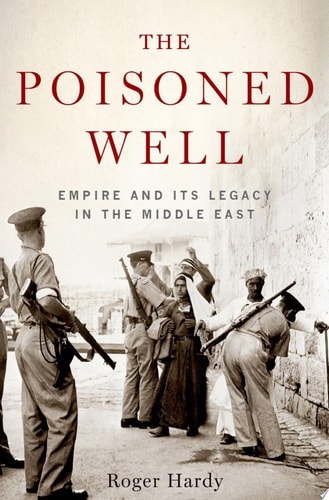
The Poisoned Well: Empire and Its Legacy in the Middle East
0
0
As an Amazon Associate and affiliate partner, Menrva Books earns from qualifying purchases. Learn more
Author Description
The conflicts and crises of today's Middle East are rooted in the colonial era. To better understand them, we need to acknowledge how Western imperialism negatively shaped the region and its destiny in the half-century between World War I and the happenings of the Cold War. That is the challenging argument of The Poisoned Well, which provides a vivid account of the struggle against European colonial rule in ten states stretching from North Africa to south Arabia.Drawing on a rich cast of eye-witnesses - ranging from nationalists and colonial administrators to soldiers, spies, and courtesans - The Poisoned Well brings to life the story of the making of the Middle East, highlighting the great dramas of decolonization such as the end of the Palestine mandate, the Suez crisis, the Algerian war of independence, and the retreat from Aden. It argues that imperialism sowed the seeds of future conflict - and poisoned relations between the Middle East and the West.Bolstered by firsthand accounts and interviews, readers will find a wise and humanistic account of the struggle for independence in the Middle East. Written by a former BBC journalist, it is a far-ranging, landmark work that will serve as the definitive history of Western imperialism in the Middle East for years to come.
Menrva's Summary
THE THESIS
This book investigates how the legacy of Western imperialism between the two World Wars and the Cold War continues to shape the contemporary conflicts and political instability of the Middle East. Roger Hardy, a former BBC journalist, utilizes a vast array of primary source materials, including personal accounts from nationalists, colonial administrators, soldiers, and spies, to construct his historical analysis. He argues that the structural and political decisions made by European powers during the era of decolonization effectively sowed the seeds for modern regional tensions. The work provides a comprehensive framework for understanding the historical friction between the Middle East and the West.
THE SCOPE MAP
What You Will Find
- Historical analysis of ten states spanning from North Africa to South Arabia.
- Detailed accounts of major decolonization events including the Suez crisis, the Algerian war of independence, and the end of the Palestine mandate.
- A narrative synthesis incorporating firsthand interviews and archival eye-witness testimonies.
Scope Limits
- The analysis is primarily focused on the period between World War I and the height of the Cold War.
- The book does not provide an exhaustive contemporary policy guide for current Middle Eastern governance.
THE AUTHORITY PERSPECTIVE
Experts and readers recognize this work as a significant contribution to the study of 20th-century colonial history due to its humanistic approach and reliance on diverse personal narratives. The text is noted for its accessibility, making it suitable for both academic researchers and general readers interested in the historical roots of modern geopolitical crises.
Page Count:
280
Publication Date:
2019-08-01
Publisher:
Oxford University Press
ISBN-10:
0190056339
ISBN-13:
9780190056339
History
Politics
New Used & Rental Textbooks
International relations
Politics & Government
20th Century
World politics
North Africa
Middle Eastern
Colonialism
Specific Topics
Middle East
Africa
Community Tags
Similar Books