Towards Image Understanding
0
0
As an Amazon Associate and affiliate partner, Menrva Books earns from qualifying purchases. Learn more
Author Description
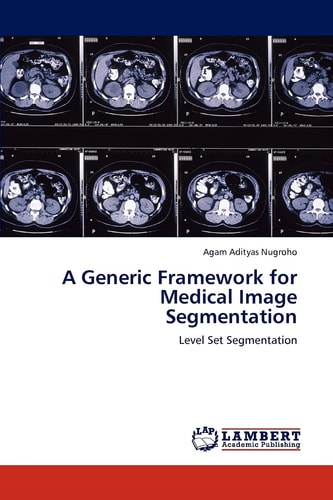
Image understanding usually includes interrelated components of image segmentation and object/scene recognition. Image segmentation extracts the objects/regions of interest from images which are then analyzed for recognition. Deformable contour methods (DCMs) are commonly applied for image segmentation. To understand the strengths and limitations of different DCMs, a comparative study to review eight major snakes and level set methods applied to the medical image segmentation is presented. The studied DCMs are compared using both qualitative and quantitative measures and the lessons learned from this medical segmentation comparison can be translated to other image segmentation domains. DCM results can be recognized for further image analysis and understanding, e.g. a graph matching algorithm is presented in this book for rather challenging segmentation applications, such as blur boundary, complex shape, and intensity inhomogeneity. The skeleton-based graph matching algorithm consists of major operations of skeleton extraction, representation, and matching for recognition, and the results are fedback into the image segmentation to increase the accuracy of the advanced segmentation.
Menrva's Summary
THE THESIS
This book investigates the interconnected components of image segmentation and object/scene recognition, focusing on Deformable Contour Methods (DCMs) for medical image segmentation. It presents a comparative study of eight major snakes and level set methods, evaluating their strengths and limitations through qualitative and quantitative measures. The findings from this medical segmentation analysis are then extended to other domains, demonstrating how DCM results can be recognized for further image analysis. Additionally, a skeleton-based graph matching algorithm is introduced for challenging segmentation applications, enhancing accuracy through feedback into the segmentation process.
THE SCOPE MAP
- Comparative study of eight major Deformable Contour Methods (DCMs), including snakes and level set methods.
- Application of DCMs specifically to medical image segmentation.
- Qualitative and quantitative measures for comparing DCM performance.
- Translation of lessons learned from medical segmentation to other domains.
- Introduction of a skeleton-based graph matching algorithm for advanced segmentation.
- Analysis of challenging segmentation applications: blur boundary, complex shape, and intensity inhomogeneity.
- Detailed explanation of skeleton extraction, representation, and matching operations.
- Feedback mechanism from recognition results to improve image segmentation accuracy.
THE AUTHORITY PERSPECTIVE
The book provides a detailed comparative analysis of Deformable Contour Methods (DCMs) for image segmentation, with a particular focus on their application in the medical field. It aims to offer insights into the strengths and limitations of various techniques, drawing lessons that can be applied across different segmentation domains. The inclusion of a skeleton-based graph matching algorithm suggests a focus on practical solutions for complex segmentation challenges. The work appears to be a technical review and methodological proposal for researchers and practitioners in image processing and computer vision.
Page Count:
164
Publication Date:
2009-10-01
Publisher:
Lap Lambert Academic Publishing GmbH KG
ISBN-10:
3838318439
ISBN-13:
9783838318431
Science
Non-Fiction
Algorithms
Machine Learning
Computer Vision
Image Processing
Community Tags
Similar Books