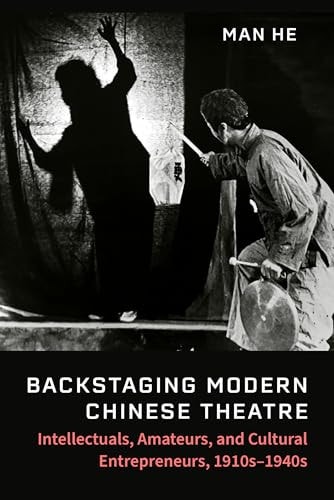
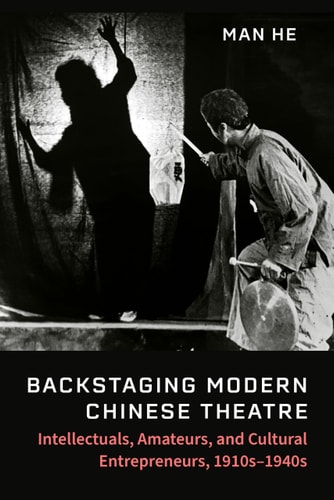
Backstaging Modern Chinese Theatre: Intellectuals, Amateurs, and Cultural Entrepreneurs, 1910s-1940s
0
0
As an Amazon Associate and affiliate partner, Menrva Books earns from qualifying purchases. Learn more
Author Description
Modern Chinese theatre once entailed a variety of forms, but now it primarily refers to spoken drama, or huaju. Backstaging Modern Chinese Theatre looks beyond scripts to examine visuality, acoustics, and performance between the two World Wars, the period when huaju gained canonical status. The backstage in this study expands from being a physical place offstage to a culturally and historically constructed social network that encompasses theatre networks, academies, and government institutions--as well as the collective work of dramatists, amateurs, and cultural entrepreneurs. Early huaju was not a mere imitation of Western realist theatre, as it is commonly understood, but a creative synthesis of Chinese and Western aesthetics. Charting huaju's evolution from American colleges to China's coastal cities and then to its rural hinterland, Man He demonstrates how the formation of modern Chinese theatre challenges dominant understandings of modernism and brings China to the center of discussions on transnational modernities and world theatres.
Menrva's Summary
THE THESIS
This book investigates the formation and evolution of modern Chinese spoken drama (huaju) between the 1910s and 1940s, challenging conventional understandings of its Western influences. Man He examines the visual, acoustic, and performative aspects of theatre beyond the script, expanding the concept of the 'backstage' to include the social networks of theatre practitioners, academic institutions, and government bodies. The study argues that early huaju was a creative synthesis of Chinese and Western aesthetics, rather than a mere imitation of Western realism. It traces huaju's development from American colleges to China's urban and rural areas, positioning it at the center of discussions on transnational modernities and world theatre.
THE SCOPE MAP
- Analysis of visuality, acoustics, and performance in early 20th-century Chinese theatre.
- Exploration of the social networks encompassing theatre practitioners, academies, and government institutions.
- Examination of the roles played by dramatists, amateurs, and cultural entrepreneurs.
- Argument for huaju as a creative synthesis of Chinese and Western aesthetics.
- Tracing the geographical spread of huaju from American colleges to China's cities and hinterland.
- Challenging dominant understandings of modernism and world theatre through the lens of Chinese theatre history.
THE AUTHORITY PERSPECTIVE
The book positions modern Chinese theatre at the center of discussions on transnational modernities and world theatres, suggesting a re-evaluation of modernist narratives. Its detailed examination of visuality, acoustics, and performance beyond the script offers a nuanced perspective on the development of huaju. The study's exploration of the 'backstage' as a constructed social network highlights the collective work of diverse cultural agents. By tracing huaju's evolution across different regions, the work challenges simplistic notions of Western influence and asserts the creative synthesis of Chinese and Western aesthetics.
Page Count:
360
Publication Date:
2025-07-01
Publisher:
University of Michigan Press
ISBN-10:
0472077554
ISBN-13:
9780472077557
Non-Fiction
History
Modern China
Transnationalism
Cultural History
Performance Studies
Theatre History
Community Tags
Other Editions(2)
Similar Books