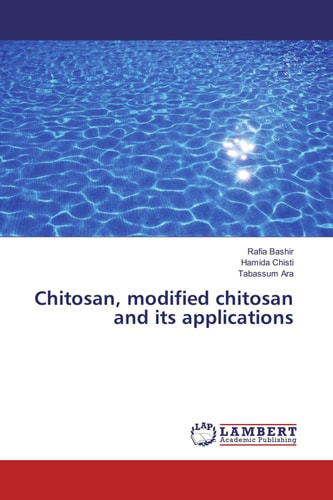
Chitosan, Modified Chitosan and Its Applications
0
0
As an Amazon Associate and affiliate partner, Menrva Books earns from qualifying purchases. Learn more
Author Description
Chitin and its deacetylated derivative chitosan are natural polymers which are composed of indiscriminately distributed a-(1-4)-linked D-glucosamine (deacetylated unit) and N-acetyl-D-glucosamine (acetylated unit). Chitin and chitosan are used in fields of biomedicine, food and agriculture. The success of chitosan in each of these specific applications is directly associated to their physicochemical properties. The aim of this book is to highlight the relationship between the physicochemical properties of the polymers and their behaviour. A purposeful characterization of chitosan concerning some biological properties and a number of specific applications (drug delivery, tissue engineering, wound dressings, wastewater treatment, and agricultural use and chitosan nanoparticles) is given. The molecular mechanism of the biological properties like biocompatibility, biodegradibility, hydrogel, antiinflammatory, and antimicrobial has been updated. These properties can be further enhanced by modifications of chitosan on its primary amino group. The modifications can be done by graft modification, chemical modifications and chitosan blend system.
Menrva's Summary
THE THESIS
This book investigates the intricate relationship between the physicochemical properties of chitin and chitosan and their diverse applications. The authors detail the composition of these natural polymers, focusing on how their unique structures influence their behavior in fields such as biomedicine, food, and agriculture. The work provides a purposeful characterization of chitosan, exploring its biological properties and specific uses in drug delivery, tissue engineering, wound dressings, wastewater treatment, and agricultural applications, including the development of chitosan nanoparticles. It also updates the molecular mechanisms behind biocompatibility, biodegradability, hydrogel formation, and anti-inflammatory and antimicrobial activities, highlighting how modifications to chitosan's primary amino group can further enhance these properties through graft modification, chemical modifications, and chitosan blend systems.
THE SCOPE MAP
- Detailed explanation of chitin and chitosan composition, including D-glucosamine and N-acetyl-D-glucosamine units.
- Exploration of the link between physicochemical properties and polymer behavior in various applications.
- Characterization of chitosan's biological properties.
- Specific applications covered: drug delivery, tissue engineering, wound dressings, wastewater treatment, and agricultural use.
- Inclusion of chitosan nanoparticles as a key application area.
- Updated molecular mechanisms for biocompatibility, biodegradability, hydrogel formation, anti-inflammatory, and antimicrobial properties.
- Methods for enhancing chitosan properties through modifications: graft modification, chemical modifications, and chitosan blend systems.
THE AUTHORITY PERSPECTIVE
This book offers a focused examination of chitosan, a derivative of chitin, detailing its composition and the critical link between its physical and chemical properties and its functional applications. It systematically covers key areas such as biomedicine, food, and agriculture, with specific attention to drug delivery, tissue engineering, wound dressings, wastewater treatment, and agricultural uses, including the formation of chitosan nanoparticles. The text also updates the understanding of the molecular basis for its biological activities and explores methods for property enhancement through chemical modifications. The scope suggests a text aimed at researchers and students in polymer science, materials science, and related biomedical and environmental fields.
Page Count:
60
Publication Date:
2017-12-06
Publisher:
LAP LAMBERT Academic Publishing
ISBN-10:
6202071044
ISBN-13:
9786202071048
Non-Fiction
Science
Biomedicine
Nanoparticles
Tissue Engineering
Biochemistry
Community Tags
Similar Books