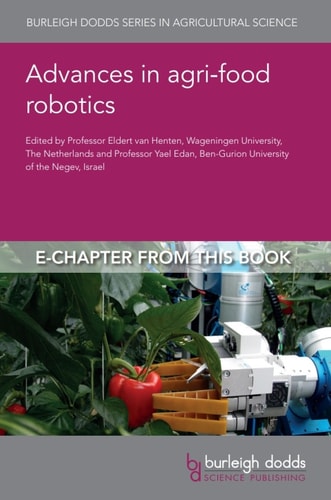
Implementing a Digital Twin for Flexible Operation of Agricultural Robotics
0
0
As an Amazon Associate and affiliate partner, Menrva Books earns from qualifying purchases. Learn more
Author Description
Robots have replaced labour in several sectors of the economy. In industrial manufacturing, digital twin systems allow to plan, schedule and optimize production by robots. In agriculture, robots have not yet reached widespread acceptance, in part because digital twin technology is rarely used. The aim of the ROBS4CROPS project is to accelerate the transition towards robotic agriculture by bringing knowledge and experience from the manufacturing domain to agriculture. The project envisions an agricultural robotic system that consists of autonomous vehicles and smart implements that are orchestrated by a Farming Controller. At the half-way mark of our 4-year project, we are able to present autonomous vehicles and smart vehicles working in four European countries, as well as an early implementation of the Farming Controller. Results so far indicate that the project’s vision is achievable and that digital twin technology will be helpful in the acceptance of robots in agriculture.
Menrva's Summary
THE THESIS
This work investigates the application of digital twin technology to enhance the operational flexibility of agricultural robotics. The ROBS4CROPS project, detailed herein, aims to bridge the gap between established robotic systems in manufacturing and their nascent adoption in agriculture. By leveraging knowledge from industrial automation, the project seeks to orchestrate autonomous vehicles and smart implements through a centralized Farming Controller, thereby accelerating the integration of robotics in farming. The presented findings, at the project's mid-point, demonstrate the feasibility of this vision and highlight the potential of digital twins to foster wider acceptance of robotic solutions in the agricultural sector.
THE SCOPE MAP
- Application of digital twin systems for planning, scheduling, and optimizing robot operations in agriculture.
- Details on the ROBS4CROPS project's approach to integrating autonomous vehicles and smart implements.
- An early implementation of the Farming Controller system.
- Case studies of robotic systems operating in four European countries.
- Analysis of the challenges and opportunities for robotic acceptance in agriculture.
- Insights into transferring knowledge from industrial manufacturing to agricultural robotics.
THE AUTHORITY PERSPECTIVE
This publication presents findings from the ROBS4CROPS project, focusing on the implementation of digital twin technology for agricultural robotics. The work details the project's mid-term progress, showcasing autonomous vehicles and smart implements operating across Europe, alongside an early version of the Farming Controller. The authors suggest that digital twin technology is a key factor in increasing the acceptance of robots within the agricultural domain, indicating the project's vision is achievable.
Page Count:
0
Publication Date:
2024-03-25
Publisher:
Burleigh Dodds Science Publishing Ltd
ISBN-10:
1801469911
ISBN-13:
9781801469913
Science & Technology
Non-Fiction
Robotics
Agriculture
Community Tags
Similar Books