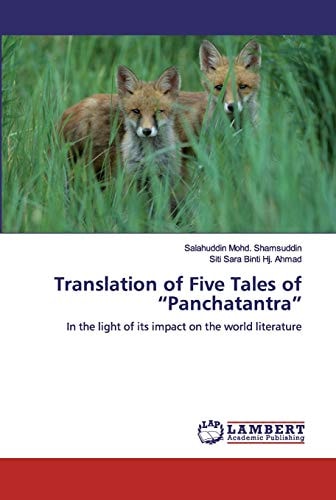
Translation of Five Tales of “Panchatantra”: In the light of its impact on the world literature
0
0
As an Amazon Associate and affiliate partner, Menrva Books earns from qualifying purchases. Learn more
Author Description
We find that the famous writer, La Fontaine (1621-1695) who was leading the pioneers of French literature, gleaned from the fountains of culture and wisdom of India, and influenced by the stories of "Panchatantra". This was as mentioned by Ḥusain Wā'iz Kāshifī in the book: "Anwār Suhailī", who presented the translation done by Abu Al-Maʿālī Nasrullah Muḥammad b. 'Abd Al-Ḥamīd b. Yaḥyā, in a new form (around the year 1144), and handed it to Prince Suhail Aḥmad in his reign, and he attributed to him by the name: Suhayli lights. La Fontaine was influenced by this book and then the book of Ibn al-Muqaffaʿ was translated into the languages of the world. It is notable that "Panchatantra" has a profound impact in changing the course of wisdom, as the birds, wild animals and beasts pronounce and speak, and the imagination and art enters in the formulation of the way leads to the rules of wisdom. La Fontaine says: "The lands of the East are the cradle of multiplied stories and parables on the tongues of animals and birds, especially, India is the cradle of these stories that spread across the earth and moved to the country of China, Tibet and reached Europe in ancient times.
Menrva's Summary
THE THESIS
This book investigates the profound and far-reaching impact of the ancient Indian collection of fables, the Panchatantra, on global literature. The authors explore how these stories, characterized by anthropomorphic animals conveying wisdom, have transcended cultural and temporal boundaries, influencing renowned writers like La Fontaine and shaping narrative traditions worldwide. The work examines the Panchatantra's unique narrative device of animal speech as a vehicle for moral and practical instruction, tracing its dissemination and adaptation across diverse cultures and literary forms.
THE SCOPE MAP
- Analysis of the Panchatantra's core themes and narrative structure.
- Detailed examination of the translation by Abu Al-Maʿālī Nasrullah Muḥammad b. 'Abd Al-Ḥamīd b. Yaḥyā, titled 'Anwār Suhailī'.
- Exploration of the influence of 'Anwār Suhailī' on the French writer La Fontaine.
- Discussion of the broader impact of the Panchatantra on world literature, including its spread to China, Tibet, and Europe.
- Consideration of the literary device of animals and birds speaking to impart wisdom.
- Contextualization of the Panchatantra within the history of Indian storytelling traditions.
THE AUTHORITY PERSPECTIVE
This scholarly work offers a detailed examination of the Panchatantra's significant influence on world literature, particularly through its adaptation and translation into various languages. The authors highlight key figures like La Fontaine and the intermediary work 'Anwār Suhailī' to illustrate the transmission of these ancient Indian fables. The book's focus on the unique narrative technique of speaking animals as a means of conveying wisdom provides a critical lens through which to understand the enduring appeal and adaptability of these stories. It positions the Panchatantra as a foundational text in the global dissemination of moral and practical instruction through narrative.
Page Count:
104
Publication Date:
2019-10-08
Publisher:
LAP LAMBERT Academic Publishing
ISBN-10:
6200437866
ISBN-13:
9786200437860
History
Non-Fiction
Indian
World Literature
Fables
Literary Criticism
Community Tags
Similar Books