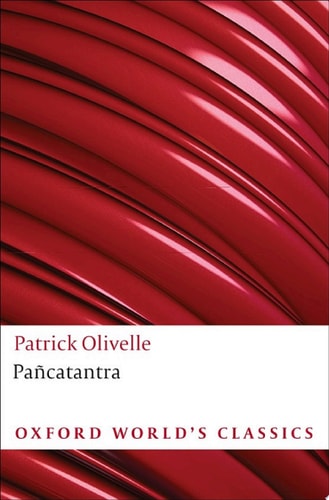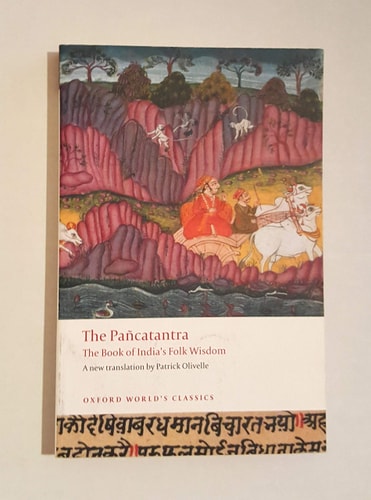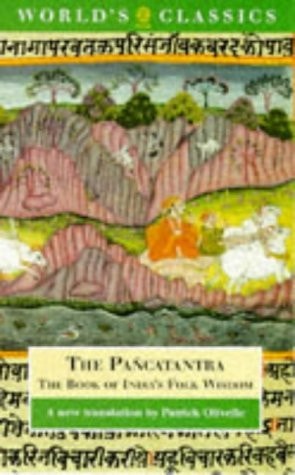
Pancatantra: The Book of India's Folk Wisdom
0
0
As an Amazon Associate and affiliate partner, Menrva Books earns from qualifying purchases. Learn more
Author Description
The Pancatantra is the most famous collection of fables in India and was one of the earliest Indian books to be translated into Western languages. No other work of Indian literature has had a greater influence on world literature, and no other collection of stories has become as popular in India itself. Patrick Olivelle presents the Pancatantra in all its complexity and rich ambivalence, examining central elements of political and moral philosophy alongside the many controversial issues surrounding its history. This new translation vividly reveals the story-telling powers of the original author, while detailed notes illuminate aspects of ancient Indian society and religion to the non-specialist reader.
Menrva's Summary
THE PULSE
A collection of interconnected animal fables serves as a didactic framework for teaching statecraft and moral conduct to young princes. Through a series of nested narratives, the text follows the instruction of three dull-witted princes by a wise Brahmin named Vishnusharman. The stories utilize anthropomorphic animals to illustrate complex political strategies, social hierarchies, and ethical dilemmas. The narrative structure is recursive, with characters within the stories telling their own tales to support their arguments or actions. The world is defined by a pragmatic, often cynical view of power dynamics and human nature.
INSIDE THE PAGES
- Nested narrative structure (stories within stories)
- Anthropomorphic animal protagonists
- Didactic tone focused on niti (political wisdom)
- Integration of verse and prose
- Satirical commentary on human behavior
- Exploration of moral ambiguity
- Focus on social and political survival
- Ancient Indian cultural and religious context
THE COLLECTIVE ECHO
Readers and scholars frequently highlight the dual nature of these fables as both entertaining stories and serious treatises on political realism. Discussion often centers on the sophisticated way the text balances moral instruction with the often ruthless pragmatism required for leadership. Critics appreciate the clarity of this translation, noting how it preserves the wit and irony of the original Sanskrit while remaining accessible to modern audiences. The work is widely regarded as a foundational text that bridges the gap between folklore and formal political philosophy, generating ongoing interest in its historical influence on global literature.
Page Count:
256
Publication Date:
1998-01-08
Publisher:
Oxford University Press
ISBN-10:
0192832999
ISBN-13:
9780192832993
Philosophy
Folklore
Indian
Mythology
Classic Literature
Fables
Folklore_india
Community Tags
Other Editions(3)

Similar Books