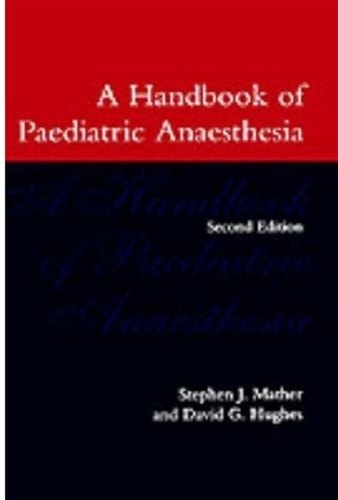
A Handbook of Paediatric Anaesthesia
0
0
As an Amazon Associate and affiliate partner, Menrva Books earns from qualifying purchases. Learn more
Author Description
This highly successful handbook aims to provide the guiding principles behind taking clinical decisions when anaesthetising and sedating children. The book is a concise and readable introduction to neonatal and paediatric anaesthesia and is aimed at anaesthetists in training. Beginning with a description of the anatomy and physiology of neonates and children, the book goes on to outline the pharmacology and action of anaesthetics and analgesics. Medical conditions which have a bearing on the use or effect of anaesthetics are discussed, and alternative methods of management are given where appropriate. Anaesthesia for specialist surgery, for day-case surgery, and for radiological procedures is covered. The book concludes with details of how to transport the critically ill child, and how to administer cardiopulmonary resuscitation.
Menrva's Summary
THE THESIS
This handbook investigates the core clinical principles and decision-making frameworks required for the safe administration of anaesthesia and sedation in pediatric patients. The authors, David G. Hughes and S. James Mather, utilize their clinical expertise to synthesize physiological data and pharmacological protocols into a practical guide for medical professionals. The text establishes a structured approach to managing neonatal and pediatric cases, emphasizing both standard procedures and specialized surgical requirements.
THE SCOPE MAP
What You Will Find
- Anatomical and physiological foundations of neonates and children
- Pharmacological profiles of common anaesthetics and analgesics
- Management protocols for specialist, day-case, and radiological surgery
- Procedures for the transport of critically ill children and cardiopulmonary resuscitation
Scope Limits
- Does not serve as a substitute for supervised clinical training or institutional policy
- Does not provide exhaustive coverage of rare or highly complex congenital anomalies
THE AUTHORITY PERSPECTIVE
Medical professionals frequently identify this text as a foundational resource for anaesthetists in training due to its concise and accessible format. Experts highlight the book's utility as a reliable reference for clinical decision-making in high-pressure pediatric environments.
Page Count:
278
Publication Date:
1996-01-01
Publisher:
Oxford Univ Pr
ISBN-10:
0192627147
ISBN-13:
9780192627148
Medical
Pediatrics
Medicine
New Used & Rental Textbooks
Reference
Community Tags
Similar Books