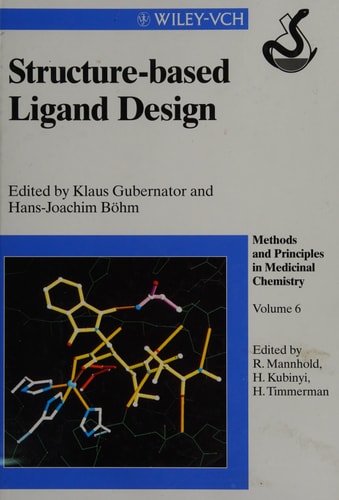
Structure-based Ligand Design, Volume 6
0
0
As an Amazon Associate and affiliate partner, Menrva Books earns from qualifying purchases. Learn more
Author Description
Most drugs bind to a clearly defined macromolecular target that is complementary in terms of structure and chemistry. This observation is the basic paradigm of structure-based ligand design. Although this method first emerged in the 1980s, it has already become a powerful tool for pharmaceutical research. Much has been learned, however, since the first attempts to discover drugs on the basis of available biochemical and structural data. Nowadays, structure-based ligand design is an established method for creating drugs with new structural features, for modifying binding activities and pharmacokinetic properties, and for elucidating binding modes and structure-activity relationships. This volume presents the underlying principles of the approach and highlights real-life applications such as the discovery of HIV-protease inhibitors. It shows that structure-based ligand design has many advantages over other more traditional approaches to designing new drugs, providing it is employed properly and with a thorough knowledge of the pitfalls to avoid. The straightforward presentation and extensive list of references to the original literature as well as numerous color figures illustrating structural relationships make this volume an indispensable tool for every scientist working in the area of drug discovery.
Menrva's Summary
THE THESIS
Structure-based ligand design is a fundamental paradigm in pharmaceutical research, leveraging the complementary structural and chemical properties of drug targets and ligands. This method, which emerged in the 1980s, has evolved into a powerful tool for drug discovery, enabling the creation of novel drug structures, modification of binding activities and pharmacokinetic properties, and elucidation of binding modes and structure-activity relationships. The volume details the underlying principles of this approach, supported by real-world applications such as the discovery of HIV-protease inhibitors. It emphasizes the advantages of structure-based ligand design over traditional methods when applied correctly, with a thorough understanding of potential pitfalls.
THE SCOPE MAP
- Principles of structure-based ligand design
- Real-life applications, including HIV-protease inhibitors
- Methods for modifying binding activities and pharmacokinetic properties
- Techniques for elucidating binding modes and structure-activity relationships
- Discussion of advantages over traditional drug design approaches
- Guidance on avoiding common pitfalls in the application of the method
- Extensive references to original literature and numerous color figures
THE AUTHORITY PERSPECTIVE
This volume is regarded as an indispensable tool for scientists in drug discovery, offering a straightforward presentation of principles and applications. Its extensive list of references and detailed color figures illustrating structural relationships enhance its utility. The book highlights the power of structure-based ligand design, particularly when applied with a thorough understanding of its nuances and potential challenges. It serves as a comprehensive guide for researchers seeking to create drugs with improved features and efficacy.
Page Count:
167
Publication Date:
1998-09-01
Publisher:
Wiley-VCH
ISBN-10:
3527293434
ISBN-13:
9783527293438
Science
Non-Fiction
Biochemistry
Drug Discovery
Community Tags
Similar Books