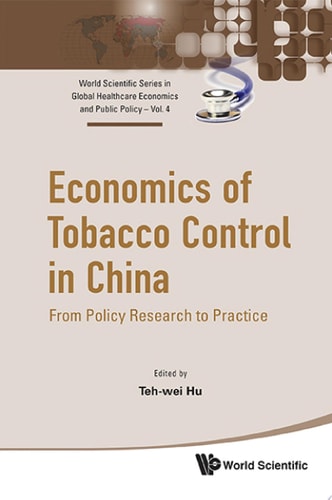
Economics of Tobacco Control in China: From Policy Research to Practice
0
0
As an Amazon Associate and affiliate partner, Menrva Books earns from qualifying purchases. Learn more
Author Description
Nearly 370 million people in China smoke; about one-third of all smokers in the world are in China; and about 1.2 million deaths in China are attributable to smoking. The death toll is expected to reach 2.2 million in 2030 if no smoking intervention programs are implemented. Taxation on tobacco products is one of the most effective tobacco control programs. This book addresses not only why China should raise cigarette tax, but also how to raise the tobacco tax, by providing decision makers with relevant research findings and quantitative estimate about the impact of raising the tobacco tax. It documents how these research findings were communicated to the Chinese government officials, and how, finally, tobacco tax was raised 10 years after China's ratification of the WHO Frame Work Convention on Tobacco Control Treaty. The purposes of this book are (1) to inform economists, public health professionals, and policymakers about the economic consequences of smoking, (2) to provide the essential economics (particularly related to taxation) and public health information upon which to build the specifics of the taxation policy that is adopted, (3) to identify barriers, challenges, and recommendations for the Chinese government, and (4) to describe how research findings can be disseminated and communicated successfully to Chinese government policy makers. It is a must read for researchers who are interested in China's tobacco control efforts and in how to communicating their findings to the policy makers. It could also be useful for tobacco control professionals, researchers and policy makers in other countries.
Menrva's Summary
THE THESIS
This book investigates the critical role of tobacco taxation in China's public health strategy and the complex process of translating economic research into effective policy. The author, Teh-wei Hu, addresses the dire consequences of smoking in China, where nearly 370 million people smoke, contributing to approximately 1.2 million deaths annually, a toll projected to double by 2030 without intervention. The book details the economic arguments for raising cigarette taxes and outlines the practical steps involved in implementing such a policy, drawing on research findings and quantitative estimates. It documents the decade-long effort to communicate these findings to Chinese government officials, culminating in a tax increase following China's ratification of the WHO Framework Convention on Tobacco Control Treaty.
THE SCOPE MAP
- The economic consequences of smoking in China, including mortality and morbidity statistics.
- The rationale and methodology for increasing cigarette taxes as a tobacco control measure.
- Case studies and quantitative estimates on the impact of tobacco taxation.
- Analysis of barriers and challenges in implementing tobacco control policies in China.
- Strategies for disseminating research findings to policymakers.
- The historical context of China's tobacco tax policy development post-WHO FCTC ratification.
THE AUTHORITY PERSPECTIVE
The book is presented as a vital resource for economists, public health professionals, and policymakers interested in China's tobacco control efforts and the practical application of research. It aims to inform readers about the economic implications of smoking and provide the foundational economic and public health information necessary for crafting effective taxation policies. The text also offers guidance on overcoming implementation hurdles and successfully communicating research to government decision-makers. Its utility extends to researchers and policymakers in other countries seeking to understand and replicate successful tobacco control strategies.
Page Count:
300
Publication Date:
2016-06-10
Publisher:
World Scientific Publishing Company
ISBN-10:
9813108738
ISBN-13:
9789813108738
Non-Fiction
Economics
Health
Public Health
Policy
China Studies
Community Tags
Similar Books