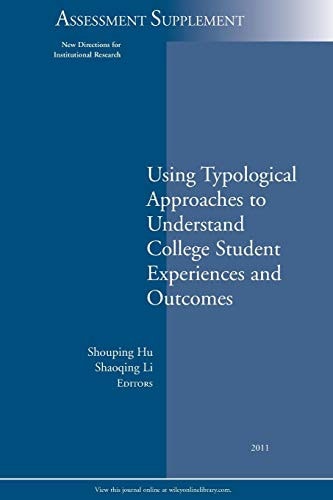
Using Typological Approaches to Understand College Student Experiences and Outcomes
0
0
As an Amazon Associate and affiliate partner, Menrva Books earns from qualifying purchases. Learn more
Author Description
Facing a new round of criticisms on the quality of undergraduate education in American colleges and universities, higher education administrators are eager to find—or create—effective programs and practices that can enrich student experiences and enhance outcomes. In order to do that, those who work at colleges and universities need to have a better understanding of their students. Institutional researchers, with access to a wealth of student data, have the analytical expertise to supply information that can guide institutional policy and practice. Typological frameworks particularly can be used to generate such information, and this volume presents rich examples of typological approaches to the study of college students. Typological research can reveal patterns in students’ characteristics, attitudes, and behaviors and how those patterns are related to desirable outcomes such as learning and persistence, or to the nature, meaning, and utility of student-faculty interactions outside the classroom. Such information can help campus leaders and other concerned groups gain a deeper understanding of their students, design better targeted and intentional interventions to optimize student experiences, and maximize student learning and personal development outcomes. This is a special supplemental issue of New Directions for Institutional Research. Always timely and comprehensive, this series provides planners and administrators in all types of academic institutions with guidelines in such areas as resource coordination, information analysis, program evaluation, and institutional management.
Menrva's Summary
THE THESIS
This volume explores the application of typological frameworks to understand and improve college student experiences and outcomes. Facing critiques of undergraduate education quality, higher education administrators seek effective programs. Institutional researchers, leveraging student data and analytical expertise, can provide crucial insights through typological approaches. This work presents examples of how these frameworks reveal patterns in student characteristics, attitudes, and behaviors, linking them to outcomes like learning, persistence, and student-faculty interactions, ultimately guiding institutional policy and practice.
THE SCOPE MAP
- Examples of typological approaches applied to college student research.
- Discussion on how typologies can reveal patterns in student characteristics, attitudes, and behaviors.
- Analysis of the relationship between student patterns and outcomes such as learning and persistence.
- Exploration of student-faculty interactions outside the classroom through a typological lens.
- Guidance for campus leaders on designing targeted interventions to optimize student experiences and development.
THE AUTHORITY PERSPECTIVE
This supplemental issue of New Directions for Institutional Research is designed to be timely and comprehensive, offering practical guidelines for academic institutions. The content focuses on analytical expertise and the strategic use of student data to inform policy and practice. It aims to equip planners and administrators with methods to enhance student learning and personal development. The volume's approach emphasizes the utility of typological frameworks for understanding complex student populations.
Page Count:
104
Publication Date:
2012-01-11
Publisher:
Wiley
ISBN-10:
1118296117
ISBN-13:
9781118296110
Non-Fiction
Science
Research Methods
Higher Education
Community Tags
Similar Books