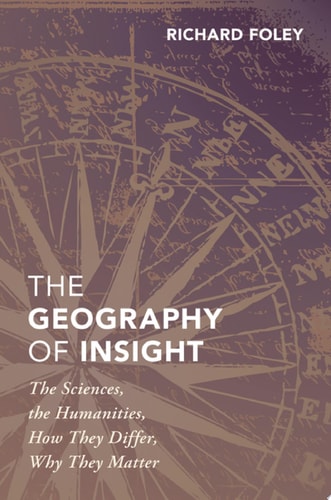
The Geography of Insight
0
0
As an Amazon Associate and affiliate partner, Menrva Books earns from qualifying purchases. Learn more
Author Description
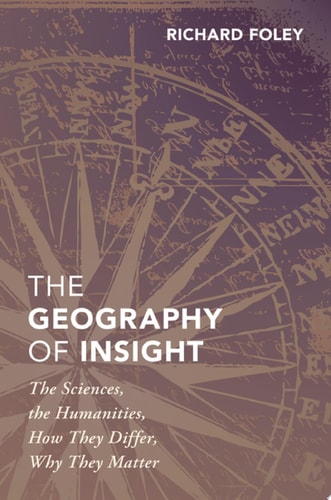
The Humanities And The Sciences Face Challenging Times, Each In Their Own Way. The Humanities Suffer Shrinking Enrollments And Budgets, And Are Perceived By Some As Irrelevant In A Changing Economy. The Sciences Face A Political Climate That Disrespects Academic Expertise And Challenges Settled Debates. Meanwhile Age-old Disputes About Their Spheres Of Knowledge Continue: Does Scientific Knowledge Subsume That Of The Humanities? Are Their Forms Of Knowledge Complementary, Or Ultimately At Odds? Richard Foley, A Philosopher Of Knowledge And The Former Dean Of Arts And Sciences At New York University, Here Provides A Concise And Accessible Overview Of What The Overarching Goals Of These Disciplines Are, Relative To One Another, And What Kind Of Knowledge They Aim To Produce. His Fundamental Argument Is That The Sciences Aim At Insights That Ideally Are Not Limited To Particular Locations Or Times And Are Also Perspective-free And Wholly Descriptive, Whereas The Humanities Appropriately Seek Insights About Specific Locations And Times, With The Insights Being Perspective-based And Having Evaluative As Well As Descriptive Elements. He Also Finds These Two Spheres Of Knowledge To Be Complementary In The Search For Understanding Of Our World And The Human Condition. The Ultimate Goal Of Foley's Investigation However Is An Eloquent Defense And Celebration Of The Culture Of Academic Research. In An Era Of Sound-bites And Tweet-length Falsehoods, This Culture Values And Supports Long-term Intellectual Achievements For The Good Of Humanity - Produced With Hard Work, Dedication, And Patience. The Geography Of Insight Is Essential Reading For Readers Both Inside And Outside Of The Academy.
Menrva's Summary
THE THESIS
This book investigates the fundamental distinctions and potential complementarity between the knowledge produced by the sciences and the humanities in an era of academic skepticism. Richard Foley, a philosopher and former Dean of Arts and Sciences at New York University, utilizes his extensive administrative and scholarly background to analyze the divergent goals of these disciplines. He argues that while the sciences pursue perspective-free, descriptive insights, the humanities provide perspective-based, evaluative understanding, and that both are necessary for a comprehensive grasp of the human condition.
THE SCOPE MAP
What You Will Find
- A comparative framework defining the distinct methodologies of scientific and humanistic inquiry
- An analysis of the current political and economic pressures facing academic institutions
- A defense of the long-term value of scholarly research and intellectual patience
Scope Limits
- The text does not provide a comprehensive history of either the sciences or the humanities
- It does not offer specific policy solutions for current university budget or enrollment crises
THE AUTHORITY PERSPECTIVE
Experts and readers characterize this work as a clear, accessible philosophical inquiry into the nature of academic knowledge. The text is noted for its balanced defense of the academy, providing a concise argument that is suitable for both scholars and general readers interested in the state of higher education.
Page Count:
176
Publication Date:
2018-01-01
Publisher:
Oxford University Press
ISBN-10:
019086513X
ISBN-13:
9780190865139
Philosophy
Science
Humanities
Epistemology
Higher Education
Academic Research
Community Tags
Similar Books