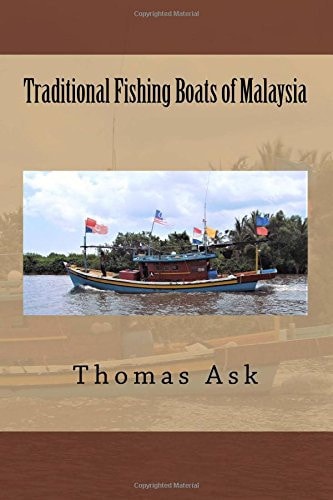
Traditional Fishing Boats of Malaysia
0
0
As an Amazon Associate and affiliate partner, Menrva Books earns from qualifying purchases. Learn more
Author Description
Enjoy a presentation of delightful traditions shown in Malaysian fishing boats. This book provides an overview of unique design features, typical designs, survey measurements as well as dozens of color photographs. This investigation, which was part of a boat design project, was awarded the Middlesex University Goulding Prize for Professional Excellence. The richness of the maritime tradition in Southeast Asia is difficult to equal anywhere in the world. With large populations and ready access to the sea, the vessels which allowed populations to harvest the sea's bounty have an important history. Due to the Malaysian peninsula being the southernmost projection of continental Asia and a subsequent obstacle to sea trade, peninsular Malaysia became subject to the trading histories of great civilizations from Indian, Arabic, and European to the west and Chinese to the east. Peninsular Malaysia is referred to in many ancient texts and archaeological finds connecting the region to sea trade, most prominently as the southern trade route between China and the Indian subcontinent. The construction of these boats is fascinating. Traditional Malaysian boats are normally built without drawings and from the shipworm and rot resistant hardwood chengal. The keel, stem, and stern are made from massive timbers into which are carved receiving surfaces for the rest of the framework. The planks are bent either by the simple application of force using clamps or by heating them with fire. The planks are fastened to internal frames. On the east coast the planks are connected using trunnels (dowels) typically made from iron wood. This joining technique is also coupled with a traditional method of sealing the planks in which a layer of melaleuca tree bark is pushed over the trunnels. Adjoining planks are hammered over these trunnels. In contrast to this traditional technique, plank sealing is produced on the west coast and some areas of the east coast, by pressing rope between the planks. T
Menrva's Summary
THE THESIS
This book investigates the rich maritime traditions of Malaysia through an examination of its unique fishing boat designs. The author, Thomas Ask, presents an overview of these vessels, detailing their distinctive features, construction methods, and historical context. The research, which earned the Middlesex University Goulding Prize for Professional Excellence, draws upon a boat design project to explore how these boats facilitated the harvesting of marine bounty and were shaped by centuries of trade and cultural exchange in Southeast Asia. The construction techniques, often performed without drawings, highlight the use of durable hardwoods like chengal and traditional fastening and sealing methods.
THE SCOPE MAP
- Overview of unique Malaysian fishing boat design features
- Details on typical boat designs and survey measurements
- Exploration of construction methods using shipworm and rot-resistant chengal hardwood
- Description of traditional timber framing and plank fastening techniques
- Analysis of plank sealing methods, including trunnels and melaleuca tree bark on the east coast
- Comparison of plank sealing with rope on the west coast
- Historical context of Malaysian maritime trade routes and cultural influences
- Dozens of color photographs illustrating the boats and their construction
THE AUTHORITY PERSPECTIVE
This book is recognized for its detailed exploration of Malaysian maritime heritage, particularly its focus on traditional fishing boat construction. The author's work, awarded the Middlesex University Goulding Prize for Professional Excellence, highlights the intricate craftsmanship and historical significance of these vessels. The detailed descriptions of materials and techniques, such as the use of chengal wood and specific plank sealing methods, offer valuable insights for those interested in naval architecture and cultural history. The inclusion of numerous color photographs further enhances its value as a comprehensive study of a vital aspect of Southeast Asian tradition.
Page Count:
160
Publication Date:
2017-11-30
Publisher:
CreateSpace Independent Publishing Platform
ISBN-10:
197988126X
ISBN-13:
9781979881265
History
Non-Fiction
Craftsmanship
Maritime history
Community Tags
Similar Books