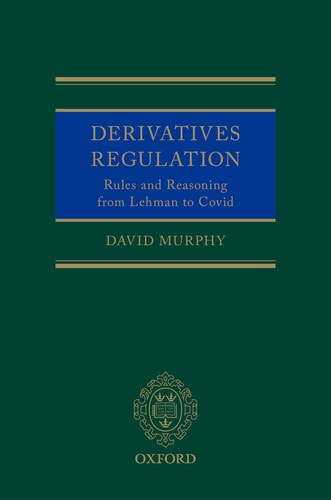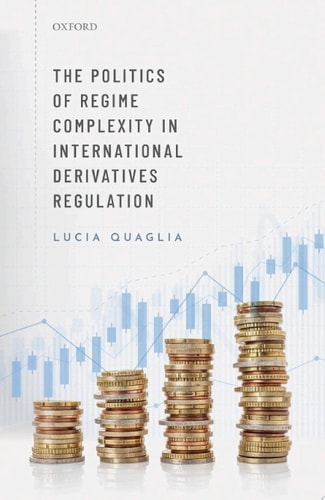
The Politics of Regime Complexity in International Derivatives Regulation
0
0
As an Amazon Associate and affiliate partner, Menrva Books earns from qualifying purchases. Learn more
Author Description
This book provides the first comprehensive account of post-crisis international regulation of derivatives by bringing together the international relations literature on regime complexity and the international political economy literature on financial regulation. It addresses three questions: What factors drove international standard-setting on derivatives post-crisis? Why did international regime complexity emerge? And how was it managed and with what outcomes? This research innovatively combines a state-centric, a transgovernmental, and business-led explanations. It examines all the main sets of standards (or elemental regimes) concerning various aspects of derivatives markets, namely: trading, clearing, and reporting of derivatives; resilience, recovery and resolution of central counterparties; capital requirements for bank exposures to central counterparties and derivatives; margins for derivatives non-centrally cleared. It is argued that regime complexity in derivatives ensued from the multi-dimensionality and the interlinkages of the problems to tackle, especially given the fact that it was a new policy area without a focal international standard-setter. Despite these challenges, international cooperation resulted in relatively precise, stringent, and consistent rules, even though there was variation across standards. The main jurisdictions played an important role in managing regime complexity, but their effectiveness was constrained by limited domestic coordination. Networks of regulators gathered in international standard-setting bodies deployed a variety of formal and informal coordination tools to deal with regime complexity. The financial industry, at times, lobbied for less precise and stringent rules and engaged in 'venue shopping', whereas, other times, it contributed to the quest for regulatory consistency.
Menrva's Summary
THE THESIS
This book investigates the drivers, emergence, and management of international regime complexity within the post-crisis regulation of derivatives markets. Lucia Quaglia, a scholar in international political economy, synthesizes international relations theory with financial regulatory frameworks to explain how global standards were established in a fragmented policy environment. The work argues that the multi-dimensional nature of derivatives markets necessitated a complex, multi-layered regulatory approach that evolved despite the absence of a single focal international standard-setter.
THE SCOPE MAP
What You Will Find
- Analysis of trading, clearing, and reporting standards for derivatives.
- Examination of resilience, recovery, and resolution protocols for central counterparties.
- Evaluation of capital requirements and margin rules for non-centrally cleared derivatives.
- Assessment of the roles played by state actors, transgovernmental networks, and financial industry lobbyists.
Scope Limits
- The analysis focuses primarily on post-crisis international standard-setting rather than historical developments prior to the 2008 financial crisis.
- The study does not provide an exhaustive legal analysis of every national implementation of these global standards.
THE AUTHORITY PERSPECTIVE
Experts recognize this work as a significant contribution to the study of international political economy and the governance of global financial markets. Readers frequently note the academic density of the prose, which is well-suited for researchers and policymakers interested in the mechanics of international regulatory cooperation.
Page Count:
243
Publication Date:
2020-01-01
Publisher:
OUP Oxford
ISBN-10:
0192635638
ISBN-13:
9780192635631
Economics
Finance
Public Policy
International relations
Community Tags
Similar Books