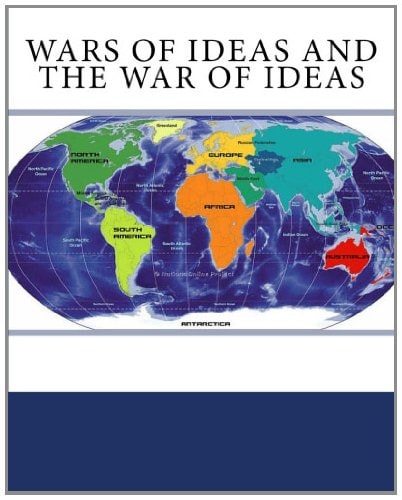
Wars of Ideas and the War of Ideas
0
0
As an Amazon Associate and affiliate partner, Menrva Books earns from qualifying purchases. Learn more
Author Description
Despite widespread emphasis on the importance of winning the war of ideas in recent strategic literature, we find few analytical studies of wars of ideas as such. With that in mind, this monograph offers a brief examination of four common types of wars of ideas, and uses that as a basis for analyzing how the United States and its allies and strategic partners might proceed in the current war of ideas. Scoping the Problem. Simply put, a war of ideas is a clash of visions, concepts, and images, and- especially-the interpretation of them. They are, indeed, genuine wars, even though the physical violence might be minimal, because they serve a political, socio-cultural, or economic purpose, and they involve hostile intentions or hostile acts. Wars of ideas can assume many forms, but they tend to fall into four general categories (though these are not necessarily exhaustive): (a) intellectual debates, (b) ideological wars, (c) wars over religious dogma, and (d) advertising campaigns. All of them are essentially about power and influence, just as with wars over territory and material resources, and their stakes, can run very high indeed. Intellectual Debates are disputes in which opposing sides advance their arguments, support them with evidence, and endeavor to refute the reasoning and conclusions of the other. Examples include the ongoing debate between Pro-Choice and Pro-Life advocates, and therecent dispute between the theories of "intelligent design" and evolution. Ideological Wars are a clash of broad visions usually organized around a doctrine, whether secular or non-secular. The most popular example of an ideological conflict is the Cold War, which involved political, economic, and military competition between the United States and the Soviet Union and their respective allies. Disputes over Religious Dogma are a form of intellectual debate, but they center on conflicting interpretations of sacred tenets or texts, the access to which can be, and often is, deliberate
Menrva's Summary
THE THESIS
This monograph examines the nature of "wars of ideas" and analyzes how the United States and its allies can navigate the current global "war of ideas."
THE SCOPE MAP
- An examination of four common types of wars of ideas: intellectual debates, ideological wars, wars over religious dogma, and advertising campaigns.
- Analysis of how these types of conflicts serve political, socio-cultural, or economic purposes.
- A framework for understanding the power and influence dynamics inherent in these conflicts.
- Strategic recommendations for the United States and its allies in the current global "war of ideas."
THE AUTHORITY PERSPECTIVE
The book analyzes the concept of "wars of ideas," defining them as clashes of visions, concepts, and interpretations that, while potentially involving minimal physical violence, serve significant political, socio-cultural, or economic ends. It categorizes these conflicts into intellectual debates, ideological wars, religious dogma disputes, and advertising campaigns, all of which are fundamentally about power and influence. The work then uses this framework to offer strategic guidance for the United States and its allies in the contemporary global "war of ideas."
Page Count:
64
Publication Date:
2008-06-30
Publisher:
CreateSpace Independent Publishing Platform
ISBN-10:
1461102472
ISBN-13:
9781461102472
Non-Fiction
Politics
Sociology
International relations
Strategy
Community Tags
Similar Books