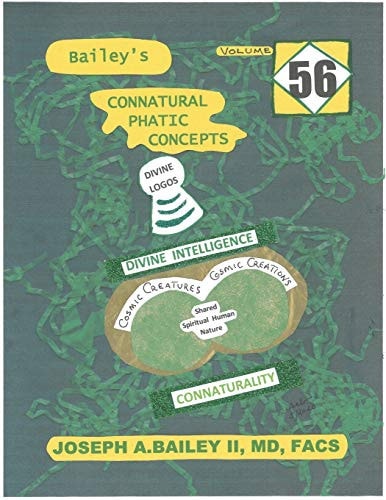
Bailey's Connatural Phatic Concepts Volume 56
0
0
As an Amazon Associate and affiliate partner, Menrva Books earns from qualifying purchases. Learn more
Author Description
ABOUT THE BOOK All languages were originated by Ancient Black Africans. Their patterns are still Human Ideals to follow for language creations with traditional grace, beauty, aesthetic complexity. African societies' highly esteemed plain, direct, practical language but this is superseded by even more cherished, preferred implicitness, indirectness, vagueness, prolixity, ambiguity, avoidance. And especially when subject matter might arouse negative emotions or when what needs communication is "difficult." Such Indirection Verbal strategies exploit gaps between denotative and figurative word meanings, as speaking in proverbs or using metaphors to substitute for disagreeable things in question. Rather than answering specific questions or at least not speaking to the point, examples are presented. Yet, this carries problems outside the Black Community, as among "outsiders" socialized into thinking in ways their languages describe their delusional world. But overriding this is the absence of language to describe the savage horrors of European racism and its devastating effects, like multiple poverties imposed on the struggling poor. Languages of Enslaved African Americans were to conceal who they were and what they thought-both culturally transmitted. Ongoing racism forces Black Americans to develop alternative coded, slang, and opposite ways. Such, for in-group understanding, is done by communicating through Figures of Communication (e.g. Figures of Speech) + self-protect from the incredibly dumb, incompetent, self-haters who control the world by the GUN. Nowhere is the inferiority of today's educational system displayed more than by declaring the verbal genius of "Street" Black youth as being mentally deficient. And they + all other envied Black People pay the price in the Marketplace.
Menrva's Summary
THE THESIS
This book investigates the origins and characteristics of language, positing that all languages originated from Ancient Black Africans and that their patterns serve as enduring ideals for language creation. The author argues that while African societies valued directness, they also cherished indirectness, ambiguity, and avoidance, particularly when discussing sensitive topics. This indirection is achieved through strategies like proverbs and metaphors, which can create challenges for those outside the Black community socialized into different linguistic frameworks. The text further explores the absence of language to describe the horrors of European racism and its effects, and how the languages of enslaved African Americans were used to conceal identity and thought, leading to the development of coded communication and slang for in-group understanding and self-protection.
THE SCOPE MAP
- Exploration of the thesis that all languages originated from Ancient Black Africans.
- Analysis of traditional African linguistic patterns, including directness, indirectness, ambiguity, and avoidance.
- Discussion of verbal strategies such as proverbs and metaphors in communication.
- Examination of the challenges posed by linguistic differences between communities.
- Critique of the inadequacy of language to describe the impact of European racism.
- Analysis of the role of language in concealing identity and thought among enslaved African Americans.
- Discussion of coded communication, slang, and 'opposite' ways of speaking developed by Black Americans.
- Critique of educational systems that misinterpret the verbal genius of Black youth.
THE AUTHORITY PERSPECTIVE
The book presents a strong, albeit controversial, thesis regarding the origins of language and its connection to African cultures. It delves into complex sociolinguistic concepts, particularly focusing on the nuances of communication within the Black community and the impact of racism on language development. The author's perspective highlights the sophisticated nature of African American vernacular and critiques societal misunderstandings of its verbal artistry. The work appears to be a scholarly examination of linguistic history and cultural expression, intended for readers interested in the intersection of language, race, and history.
Page Count:
590
Publication Date:
2020-01-01
Publisher:
Amazon Digital Services LLC - KDP Print US
ISBN-13:
9798649696517
Non-Fiction
Linguistics
Community Tags
Similar Books