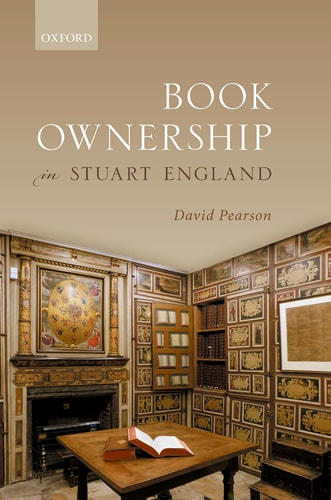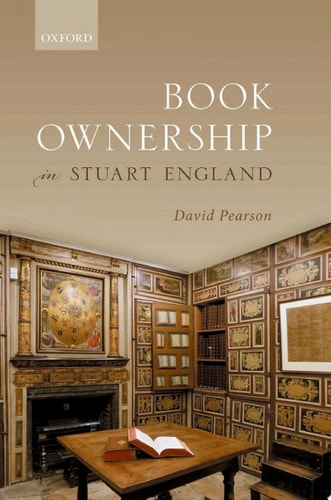
Book Ownership in Stuart England
0
0
As an Amazon Associate and affiliate partner, Menrva Books earns from qualifying purchases. Learn more
Author Description
This volume provides a wide-ranging account of the development and importance of private libraries and book ownership through the seventeenth century, based upon many kinds of evidence, including examination of thousands of books, and a list of over 1,300 known owners from diverse backgrounds. It considers questions of evolution, contents and size, and motives for book ownership, during a century when growing markets for both new and second-hand books meant that books would be found, in varying numbers, in the homes of all kinds of people from the humble to the wealthy. Book ownership by women, and by non-professional households, is explicitly explored. Other topics include the balance of motivation between books for use, or for display; the relationship between libraries and museums; and cultures of collecting. While presenting a wealth of information in this field, conveniently brought together, this volume also advances methodologies for book history, and makes extensive use of material evidence such as bookbindings. It challenges received wisdom around priorities for studying private libraries, and the terminology which is appropriate to use. In addition, the list of owners, detailed in the Appendix, make this book a work of permanent reference, alongside its value in advancing book history.
Menrva's Summary
THE THESIS
This volume investigates the evolution, scale, and social significance of private book ownership in seventeenth-century England. David Pearson, a recognized expert in book history and bibliography, utilizes an extensive dataset derived from the physical examination of thousands of volumes to challenge existing academic assumptions regarding historical literacy and collection practices. By analyzing the habits of diverse social strata, the author constructs a framework that redefines how historians interpret the presence of books in non-professional and domestic settings.
THE SCOPE MAP
What You Will Find
- A comprehensive analysis of book ownership patterns across seventeenth-century English society.
- Methodologies for interpreting material evidence, specifically focusing on bookbindings and provenance.
- A detailed appendix listing over 1,300 historical book owners from various socioeconomic backgrounds.
Scope Limits
- The study is geographically restricted to England during the seventeenth century.
- It does not provide an exhaustive catalog of every private library in existence during the period.
THE AUTHORITY PERSPECTIVE
Scholars and bibliographers regard this work as a foundational reference for the study of early modern material culture. Readers frequently note the academic density of the prose, which provides a rigorous and highly detailed examination of historical book trade practices.
Page Count:
341
Publication Date:
2021-01-01
Publisher:
OUP Oxford
ISBN-10:
0192642723
ISBN-13:
9780192642721
History
Book History
Cultural History
Seventeenth Century
English
Bibliography
English & College Success