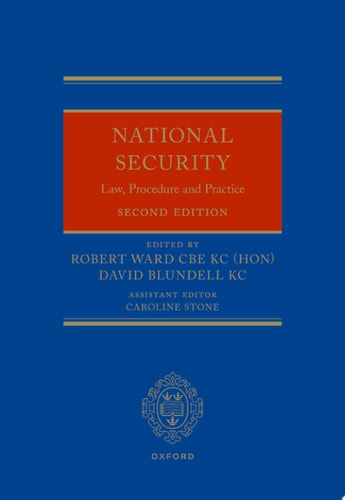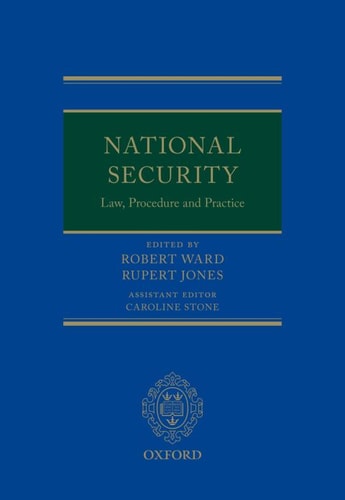
National Security Law, Procedure, and Practice
0
0
As an Amazon Associate and affiliate partner, Menrva Books earns from qualifying purchases. Learn more
Author Description
This detailed, practitioner text, explains national security law in all its aspects. It collates and explains the core elements of the law, both substantive and procedural, and the practical issues which may arise in national security litigation. The book draws on the professional experience of a team of expert contributors. The first part explores the meaning of “national security”, examines the respective roles in this area of Parliament, the executive and the courts, and explains the law relating to the security and intelligence agencies, their powers and oversight. The core of the book addresses the various executive measures used to disrupt terrorism, espionage and other hostile state activity, usually on the basis of secret intelligence, and the civil proceedings that may result from executive action taken for the national security purposes. The third part addresses national security and the criminal law. The remaining chapters address national security law in such diverse contexts as inquests, inquiries, employment, vetting, family, freedom of information, and data protection proceedings. National security law is now of relevance to a wide range of practising lawyers, judges, legislators, policymakers, oversight bodies, and academic experts working in a variety of legal fields well beyond public law. The highly-specialised nature of the topic make this book a vital text not only for those seeking an overview of the law, but also for experienced practitioners instructed to act in proceedings in which national security issues may arise. The intense media and public scrutiny which accompanies many national security cases will also make this book of interest to a wider audience seeking to understand the legal context of such cases.
Menrva's Summary
THE THESIS
This text investigates the complex intersection of national security, legal procedure, and executive authority within the modern state. The authors, a team of expert contributors, synthesize substantive law and procedural requirements to provide a comprehensive framework for practitioners. By examining the roles of Parliament, the executive, and the judiciary, the text clarifies how legal systems manage intelligence-based actions and litigation.
THE SCOPE MAP
What You Will Find
- Analysis of the legal definition of national security and agency oversight mechanisms.
- Examination of executive measures used to counter terrorism, espionage, and hostile state activity.
- Coverage of diverse legal contexts including inquests, employment law, vetting, and data protection.
Scope Limits
- The text focuses primarily on the legal and procedural framework rather than the political history of specific intelligence operations.
- It does not provide a comparative analysis of international national security laws outside of the primary jurisdiction.
THE AUTHORITY PERSPECTIVE
Experts identify this work as a foundational reference for practitioners and judges navigating the complexities of national security litigation. Readers frequently note the high level of technical detail and the practical utility of the procedural guidance provided throughout the chapters.
Page Count:
1093
Publication Date:
2021-01-01
Publisher:
OUP Oxford
ISBN-10:
0192650416
ISBN-13:
9780192650412
Public Law
Professional Career & Trade
Criminal Law
National security
Law
Government
Community Tags
Similar Books