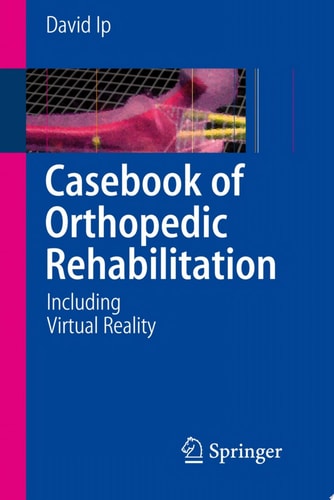
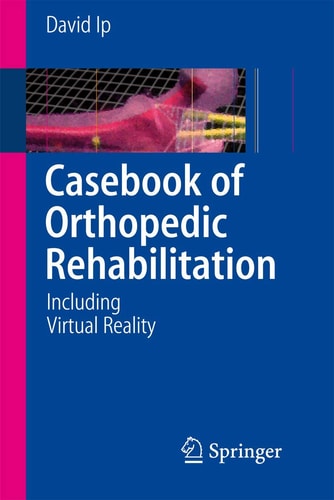
Casebook of Orthopedic Rehabilitation Including Virtual Reality
0
0
As an Amazon Associate and affiliate partner, Menrva Books earns from qualifying purchases. Learn more
Author Description
As the name implies, this “casebook” contains a series of clinical cases on various topics in orthopedic rehabilitation that the author encountered over his 23 years of practice ranging from the extremely common co- ditions like knee arthritis, to newer technologies evolved in the recent years including the use of smart materials in orthopedics, hypergravity stimulation therapy, and virtual reality. Many of us must have encountered difcult real life hurdles to - habilitation in real clinical practice in which patients have difculty in coming back for rehabilitation either because they live very far away, or they do not really have adequate time, or they simply only agree for home-based rehabilitation for various reasons. In these case scenarios, no matter how good a “protocol” one has on hand, it will be difcult to achieve the expected result. When the author was still young, he made the common mistake of accepting lesser outcomes from these patients saying to myself that it is a question of compliance. However, with large strides in computer engineering, even rural district patients can have acceptable rehabilitation as long as they have a telephone line and the right computer hardware and sofware and input-output devices to - fect tele-rehabilitation via the aid of virtual reality rather than just rel- y ing on video conferencing alone.
Menrva's Summary
THE THESIS
This casebook explores innovative approaches to orthopedic rehabilitation, particularly focusing on overcoming patient compliance challenges through technology. The author, drawing on 23 years of clinical experience, presents a series of real-world cases that address common conditions like knee arthritis as well as emerging technologies such as smart materials, hypergravity stimulation, and virtual reality. The text highlights how advancements in computer engineering enable effective tele-rehabilitation, offering a viable alternative to traditional methods when patients face barriers like distance, time constraints, or preference for home-based care.
THE SCOPE MAP
- Clinical cases spanning common orthopedic conditions (e.g., knee arthritis).
- Exploration of newer technologies in rehabilitation, including smart materials and hypergravity stimulation.
- Detailed examination of virtual reality applications in tele-rehabilitation.
- Discussion of patient compliance issues and strategies to overcome them.
- Author's personal clinical experiences and insights from 23 years of practice.
- Framework for effective remote rehabilitation using computer hardware and software.
THE AUTHORITY PERSPECTIVE
The book presents a practical, case-based approach to orthopedic rehabilitation, emphasizing the integration of technology to improve patient outcomes. The author's extensive experience suggests a focus on real-world clinical challenges and their innovative solutions. The inclusion of virtual reality and other advanced technologies indicates a forward-looking perspective on the future of rehabilitation practices. This work is likely to be of interest to clinicians seeking to enhance their treatment strategies and explore the potential of digital tools in patient care.
Page Count:
330
Publication Date:
2007-12-08
Publisher:
Springer Science & Business Media
ISBN-10:
3540744274
ISBN-13:
9783540744276
Non-Fiction
Science & Technology
Case studies
Orthopedics
Rehabilitation
Community Tags
Other Editions(2)
Similar Books