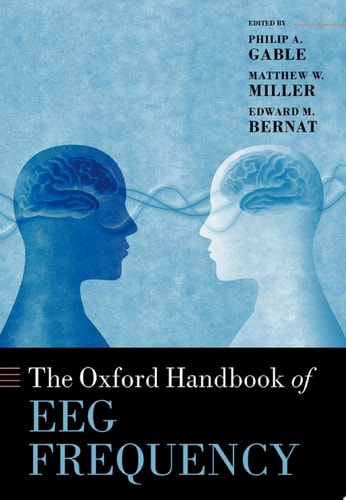
The Oxford Handbook of EEG Frequency
0
0
As an Amazon Associate and affiliate partner, Menrva Books earns from qualifying purchases. Learn more
Author Description
The use of electroencephalography (EEG) to study the human mind has seen tremendous growth across a vast array of disciplines due to increased ease of use and affordability of the technology. Typically, researchers study how the magnitude of the waves changes over time or how the rhythm (frequency) of the waves changes over time. The Oxford Handbook of EEG Frequency is arguably the first book to comprehensively describe the ways to study how the frequency of the waves changes over time and how changes in frequency are linked to cognitive, affective, and motor processes. Consisting of 23 chapters written by leading authorities in the field, the book is separated into three sections, with the first focusing on the basics of EEG frequency research, linking frequency analyses to core components of EEG research with event-related potential (ERP) components and local field potentials (LFPs) in non-human animals. The second section looks at specific EEG frequency components that are commonly studied using traditional frequency bands of activity to study specific psychological processes. Finally, the third section explores EEG frequency analyses in special populations and altered states. Each chapter provides a diverse perspective on the topic, giving readers the opportunity to learn about a vast array of methods to conduct EEG frequency analyses, from 'traditional' to cutting-edge techniques, providing a comprehensive and in-depth overview of electroencephalography (EEG).
Menrva's Summary
THE THESIS
This volume investigates the methodologies and theoretical frameworks required to analyze electroencephalography (EEG) frequency changes and their correlations with cognitive, affective, and motor processes. Edited by Matthew Miller, Edward Bernat, and Philip Gable, the text compiles contributions from leading researchers to standardize the study of frequency-based brain activity. It provides a structured approach to interpreting how wave rhythms fluctuate over time, bridging the gap between traditional techniques and modern analytical practices.
THE SCOPE MAP
What You Will Find
- Foundational principles of EEG frequency research and event-related potential (ERP) components
- Comparative analysis of local field potentials (LFPs) in non-human animal models
- Detailed examination of traditional frequency bands and their psychological correlates
- Methodologies for analyzing EEG data in special populations and altered states
- A comprehensive overview of both established and emerging analytical techniques
Scope Limits
- The text does not provide a general introduction to basic neuroanatomy or clinical neurology outside the context of EEG frequency analysis
- It does not serve as a software-specific manual for proprietary EEG processing tools
THE AUTHORITY PERSPECTIVE
Experts identify this handbook as a foundational reference for researchers seeking to integrate frequency-based analysis into their psychological studies. Readers frequently note the technical density of the prose, which is intended for advanced students and professional neuroscientists.
Page Count:
629
Publication Date:
2022-01-01
Publisher:
OUP Oxford
ISBN-10:
0192653377
ISBN-13:
9780192653376
Psychology
Science
Neuroscience
Research Methods
Behavioral Therapy
Reference
Medical
Community Tags
Similar Books