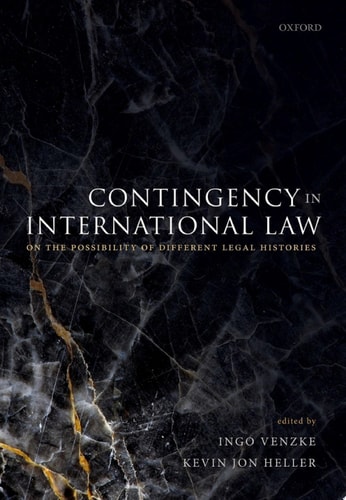
Contingency in International Law: On the Possibility of Different Legal Histories
0
0
As an Amazon Associate and affiliate partner, Menrva Books earns from qualifying purchases. Learn more
Author Description
This book poses a question that is deceptive in its simplicity: could international law have been otherwise? Today, there is hardly a serious account left that would consider the path of international law to be necessary, and that would refute the possibility of a different law altogether. But behind every possibility of the past stands a reason why the law developed as it did. Only with a keen sense of why things turned out the way they did is it possible to argue about how the law could plausibly have turned out differently. The search for contingency in international law is often motivated, as it is in this volume, by a refusal to resign to the present state of affairs. By recovering past possibilities, this volume aims to inform projects of transformative legal change for the future. The book situates that search for contingency theoretically and carries it into practice across many fields, with chapters discussing human rights and armed conflict, migrants and refugees, the sea and natural resources, foreign investments and trade. In doing so, it shows how politically charged questions about contingency have always been.
Menrva's Summary
THE THESIS
This book investigates whether the historical trajectory of international law was inevitable or if alternative legal frameworks were historically plausible. The author examines the intersection of historical contingency and legal development, arguing that understanding the specific reasons behind past legal outcomes is a prerequisite for proposing meaningful, transformative changes to the current international legal order.
THE SCOPE MAP
What You Will Find
- Theoretical frameworks for analyzing historical contingency in legal systems
- Case studies on human rights and armed conflict
- Analysis of legal developments regarding migrants and refugees
- Evaluations of international law concerning natural resources, trade, and foreign investment
Scope Limits
- The text does not provide a comprehensive history of all international legal treaties
- It does not offer a prescriptive manual for specific legislative reform
THE AUTHORITY PERSPECTIVE
Scholars in the field of international law identify this work as a significant contribution to the study of legal historiography and political theory. Readers frequently note the academic density of the prose, which is intended for an audience of legal professionals, historians, and advanced students of international relations.
Page Count:
566
Publication Date:
2021-01-01
Publisher:
OUP Oxford
ISBN-10:
0192652907
ISBN-13:
9780192652904
Human rights
Jurisprudence
Professional Career & Trade
Legal History
International relations
International Law
Community Tags
Similar Books