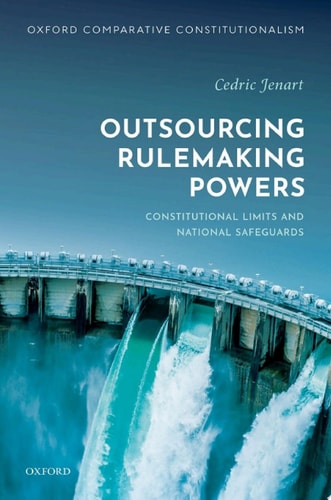
Outsourcing Rulemaking Powers: Constitutional Limits and National Safeguards
0
0
As an Amazon Associate and affiliate partner, Menrva Books earns from qualifying purchases. Learn more
Author Description
Within democratic states, parliaments have always been regarded as playing a pivotal role in the creation of rules. Through its composition, parliament represents the opinions and interests of society, which it serves through the legislative process. But in an increasingly globalized world, nation-states are confronted with issues that require international cooperation, expert knowledge and flexibility to resolve. Rather than taking the lead, parliaments are increasingly settling for a managerial position and have begun to outsource their rulemaking powers (and other constitutional responsibilities) rather than exercising them themselves. Outsourcing Rulemaking Powers identifies the shared constitutional principles that determine the limits to the outsourcing of rulemaking powers. It asks fundamental questions of its readers, such as: which powers should be outsourced? And to whom? What mechanisms are in place to guarantee the quality of the rules they make? Through the examination of multiple countries, this book argues that there should be minimal legal safeguards to which all rules must heed, in particular those made by autonomous public or private actors. Offering a bridge between traditional constitutional law and transnational private law, this book will be of interest to both practitioners and scholars within the global communities of comparative constitutionalism, global administrative law and transnational private law.
Menrva's Summary
THE THESIS
This book investigates the constitutional boundaries and necessary legal safeguards surrounding the delegation of legislative authority by national parliaments to external actors. Cedric Jenart examines the shift from parliamentary-led rulemaking to the outsourcing of these powers in response to globalization, expert requirements, and the need for administrative flexibility. By analyzing constitutional principles across multiple jurisdictions, the author proposes a framework for minimal legal standards that must govern rules created by autonomous public or private entities.
THE SCOPE MAP
What You Will Find
- Comparative analysis of constitutional limits on legislative delegation
- Frameworks for evaluating the legitimacy of autonomous rulemaking bodies
- Examination of the intersection between constitutional law and transnational private law
Scope Limits
- Does not provide an exhaustive survey of every national legal system
- Focuses primarily on constitutional and administrative theory rather than specific sector-by-sector regulatory implementation
THE AUTHORITY PERSPECTIVE
Scholars and practitioners in the fields of comparative constitutionalism and global administrative law view this work as a significant contribution to the discourse on modern governance. The text is noted for its rigorous academic approach in bridging the gap between traditional legislative theory and the realities of transnational regulatory power.
Page Count:
313
Publication Date:
2022-01-01
Publisher:
OUP Oxford
ISBN-10:
0192652621
ISBN-13:
9780192652621
Law
Administrative Law
Constitutional Law
Governance
Professional Career & Trade
Comparative Law
Community Tags
Similar Books