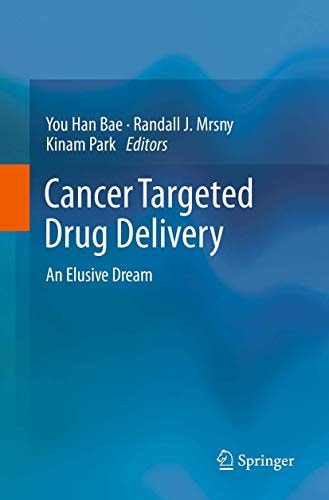
Cancer Targeted Drug Delivery: An Elusive Dream
0
0
As an Amazon Associate and affiliate partner, Menrva Books earns from qualifying purchases. Learn more
Author Description
This book was conceived from a simple question as to why cancer is so difficult to treat. Ultimately we want to find ways to cure cancers, but that may be an elusive dream at least with the technologies we have now and expect to have in the near future. This leads the question of whether it is possible to improve current cancer treatment methods, especially from the perspective of enhancing targeted drug delivery to tumors. This volume is designed to provide information related to the difficulties in treating cancers through targeted drug delivery, our current understanding of cancer biology, and potential technologies that might be used to achieve enhanced drug delivery to tumors. An ideal drug delivery system for treating cancers would maximize the therapeutic efficacy with minimal side effects in clinical applications. The seemingly improved anticancer efficacy of the current nanoparticle-based formulations needs to be viewed from the context of very poor success rates for translation to human applications. The results of in vitro cell culture models and small animal in vivo experiments have not been extrapolated to clinical applications. Finding the reasons for the lack of successful translation is required if we are to discover approaches to substantially extend the survival time of cancer patients, and hopefully identify cures. Cancer Targeted Drug Delivery: Elusive Dream describes some answers of achieving the so far elusive dream of treating cancers like other chronic diseases with therapies that focus using improved drug delivery systems designed to better align with the unique biological and physiological properties of cancer.
Menrva's Summary
THE THESIS
The central challenge in cancer treatment lies in the difficulty of delivering therapeutic agents effectively and specifically to tumors while minimizing harm to healthy tissues. This book explores the persistent question of why cancer remains so difficult to treat, acknowledging that a complete cure may be an elusive dream with current and near-future technologies. It aims to provide insights into enhancing current cancer treatment methods, particularly through improved targeted drug delivery to tumors, by examining the complexities of cancer biology and the potential of emerging technologies. The ideal scenario involves maximizing therapeutic efficacy with minimal side effects, a goal that current nanoparticle-based formulations have struggled to achieve in human applications, despite promising results in vitro and in small animal models.
THE SCOPE MAP
- Difficulties in treating cancers through targeted drug delivery.
- Current understanding of cancer biology relevant to drug delivery.
- Potential technologies for enhanced drug delivery to tumors.
- Analysis of the translation gap between preclinical models and clinical applications.
- Strategies for improving drug delivery systems to align with cancer's unique biological and physiological properties.
- Discussion on maximizing therapeutic efficacy while minimizing side effects.
THE AUTHORITY PERSPECTIVE
This volume addresses the significant challenge of targeted drug delivery in cancer treatment, a field where preclinical successes have not consistently translated to clinical efficacy. The authors highlight the gap between in vitro and in vivo experimental results and human applications, suggesting that a deeper understanding of cancer biology and improved drug delivery systems are crucial for advancing patient survival and potential cures. The book's focus on aligning therapeutic strategies with the unique properties of cancer indicates a comprehensive approach to overcoming the current limitations in oncology.
Page Count:
720
Publication Date:
2016-08-23
Publisher:
Springer New York
ISBN-10:
1493945149
ISBN-13:
9781493945146
Science
Science & Technology
Non-Fiction
Cancer Research
Biotechnology
Medicine
Community Tags
Other Editions(2)

Similar Books







Reader Comments
Share Your Thoughts
No comments yet. Be the first to share your thoughts!