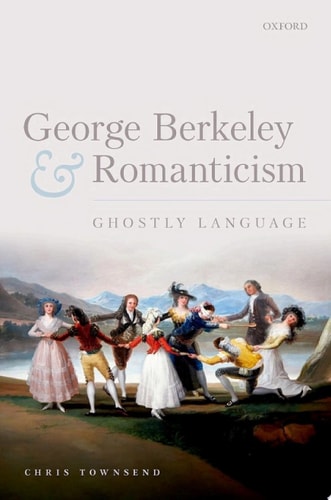
George Berkeley and Romanticism: Ghostly Language
0
0
As an Amazon Associate and affiliate partner, Menrva Books earns from qualifying purchases. Learn more
Author Description
George Berkeley's mainstream legacy amongst critics and philosophers, from Samuel Johnson to Bertrand Russell, has tended to concern his claim that the objects of perception are in fact nothing more than our ideas. Yet there's more to Berkeley than idealism alone, and the poets now grouped under the label 'Romanticism' took up Berkeley's ideas in especially strange and surprising ways. As this book shows, the poets Blake, Wordsworth, Coleridge, and Shelley focused less on Berkeley's arguments for idealism than they did on his larger, empirically-derived claim that nature constitutes a kind of linguistic system. It is through that 'ghostly language' that we might come to know ourselves, each other, and even God. This book is a reappraisal of the role that Berkeley's ideas played in Romanticism, and it pursues his spiritualized philosophy across a range of key Romantic-period poems. But it is also a re-reading of Berkeley himself, as a thinker who was deeply concerned with language and with written--even literary--style. In that sense, it offers an incisive case study into the reception of philosophical ideas into the workings of poetry, and of the role of poetics within the history of ideas more broadly.
Menrva's Summary
THE THESIS
This book investigates how the philosophical framework of George Berkeley, specifically his conceptualization of nature as a linguistic system, influenced the development of Romantic poetry. Chris Townsend examines the intersection of Berkeley’s empirical philosophy and the creative output of major Romantic poets. By shifting focus away from traditional interpretations of Berkeleyan idealism, the author argues that his theories on language provided a foundational structure for the spiritual and self-reflective themes prevalent in the works of Blake, Wordsworth, Coleridge, and Shelley.
THE SCOPE MAP
What You Will Find
- Analysis of Berkeley’s linguistic philosophy as a precursor to Romantic poetics
- Close readings of key poems by William Blake, William Wordsworth, Samuel Taylor Coleridge, and Percy Bysshe Shelley
- Examination of Berkeley as a literary stylist rather than solely a metaphysical philosopher
Scope Limits
- Does not provide a comprehensive biography of George Berkeley
- Does not cover the entirety of the Romantic movement, focusing instead on specific poets and their engagement with Berkeleyan thought
THE AUTHORITY PERSPECTIVE
Scholars and critics recognize this work as a significant contribution to the study of the intersection between philosophy and literature. Readers frequently note the academic density of the prose, which is intended for those familiar with both 18th-century philosophy and Romantic-period poetry.
Page Count:
238
Publication Date:
2022-01-01
Publisher:
OUP Oxford
ISBN-10:
019266221X
ISBN-13:
9780192662217
Poetry
Philosophy
Literary Criticism
History of Ideas
Romanticism
English literature
English
English & College Success
Community Tags
Similar Books